Tāpis
A love letter to our Dog Kin
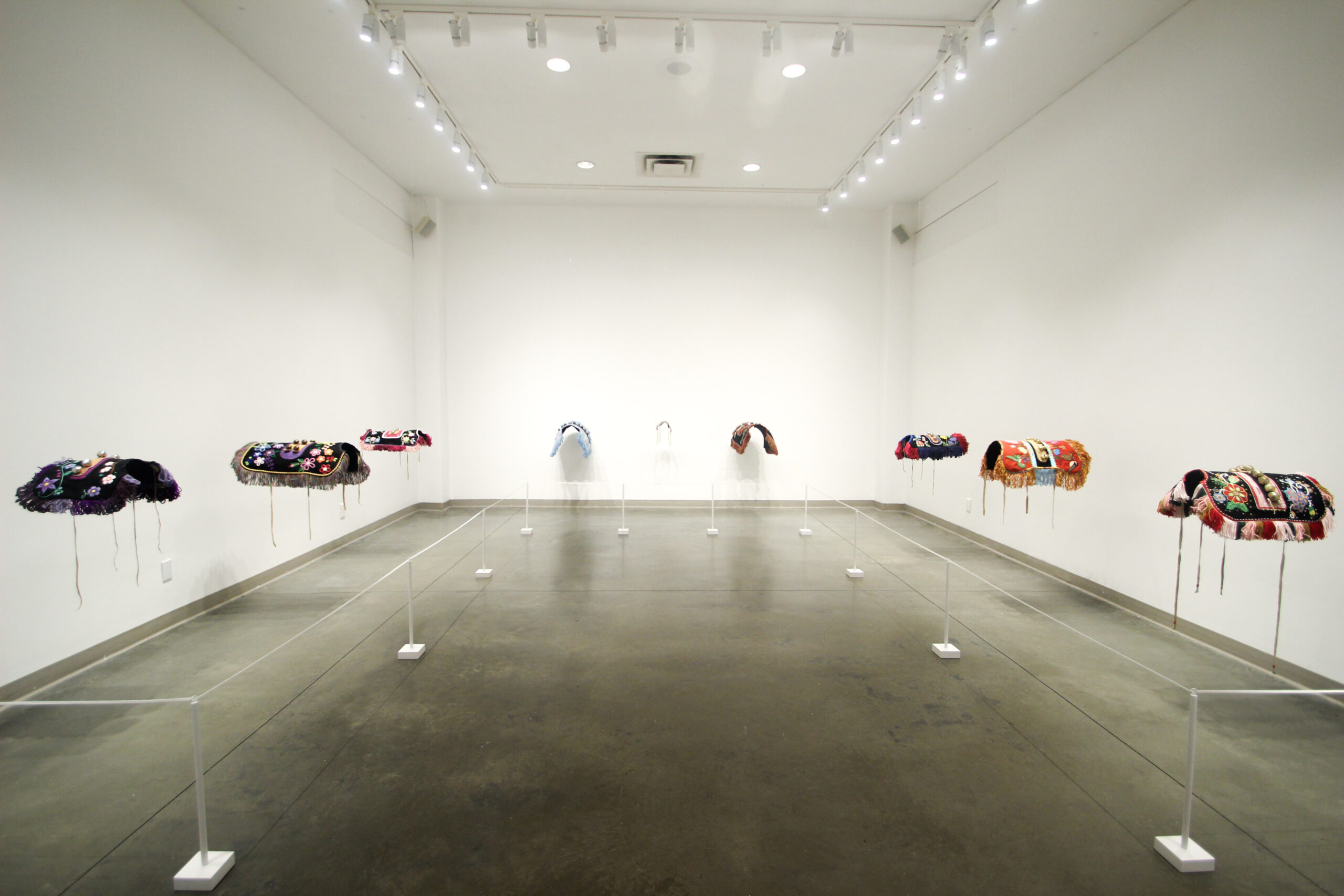
September 10 – October 18, 2024
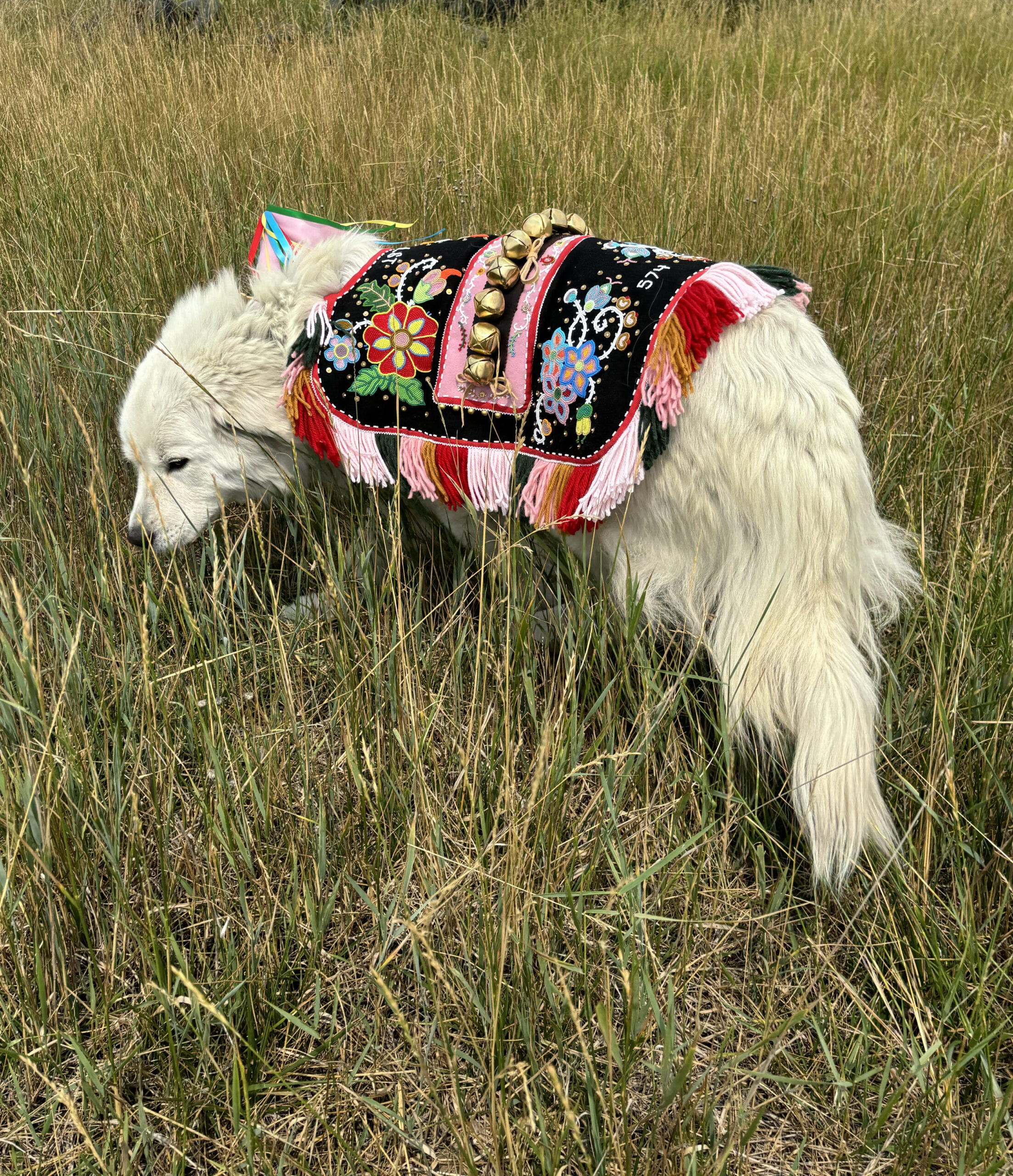
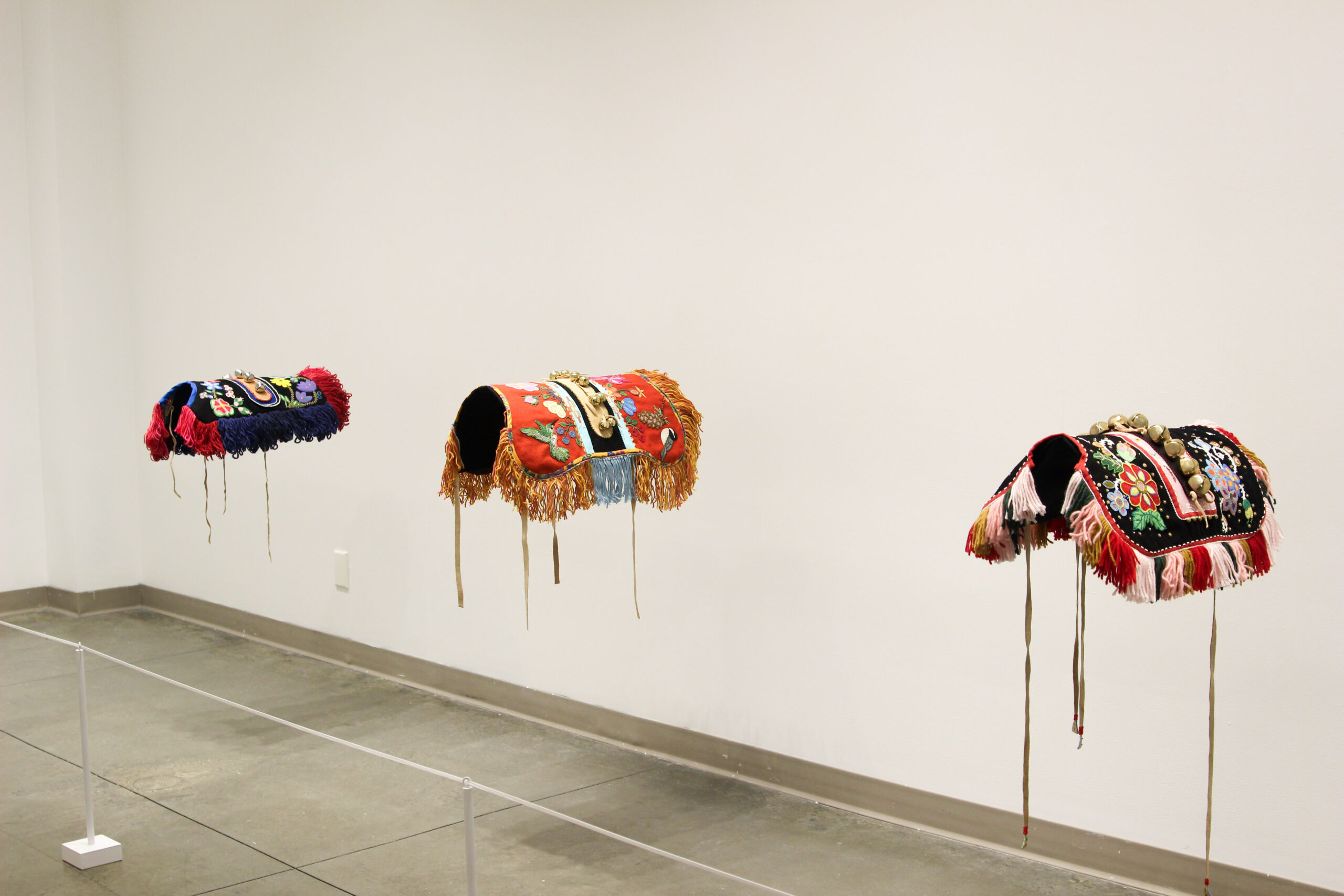
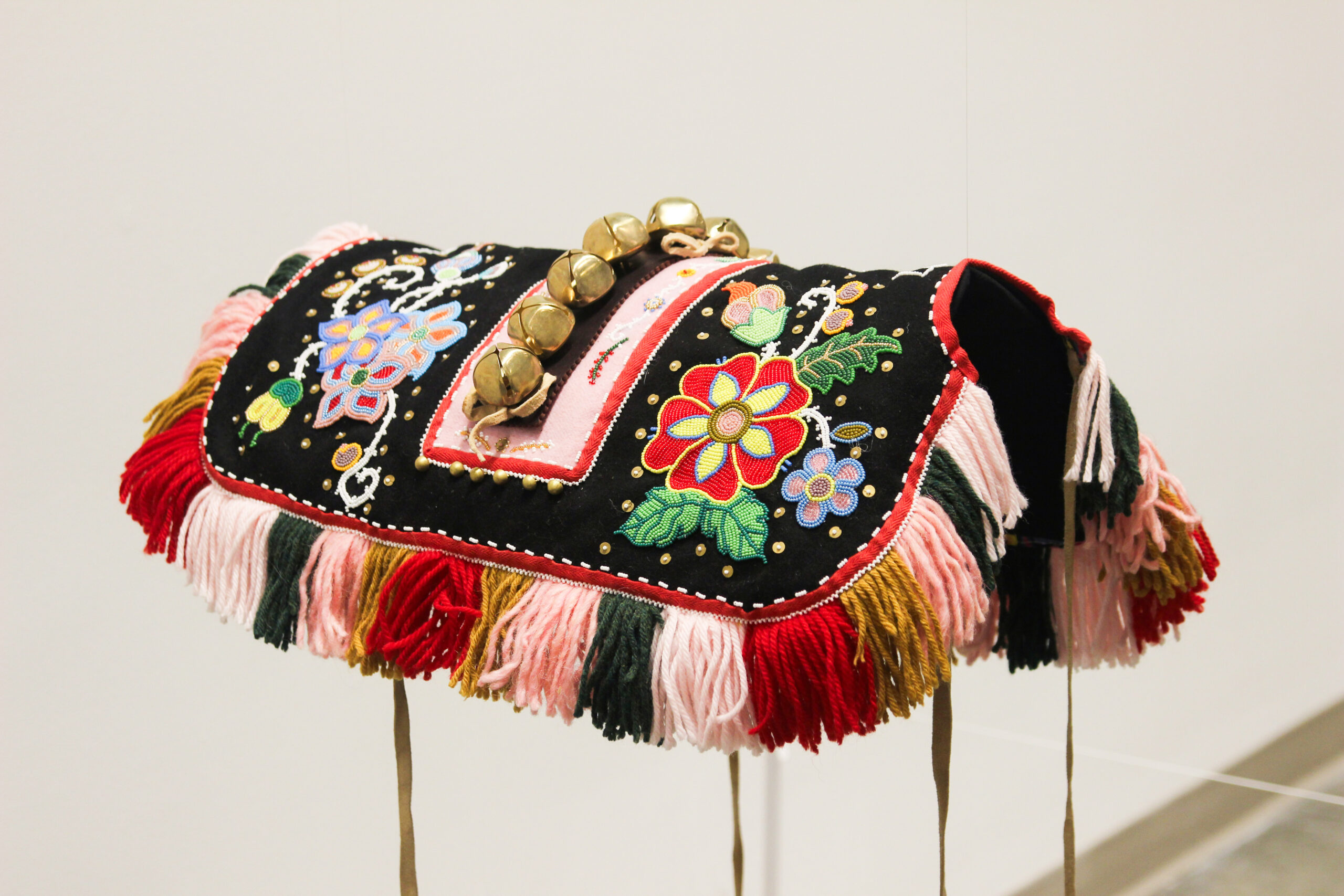
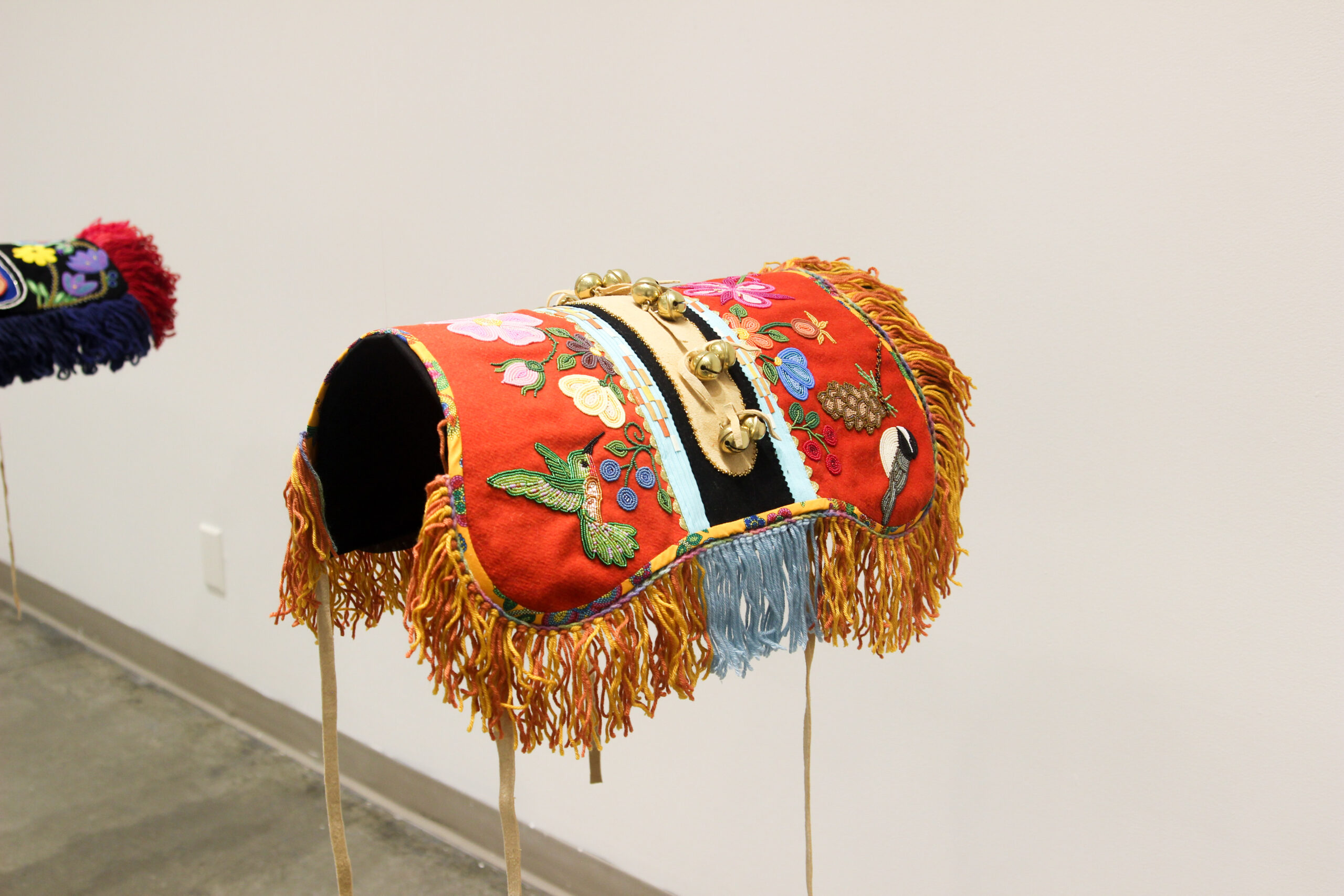
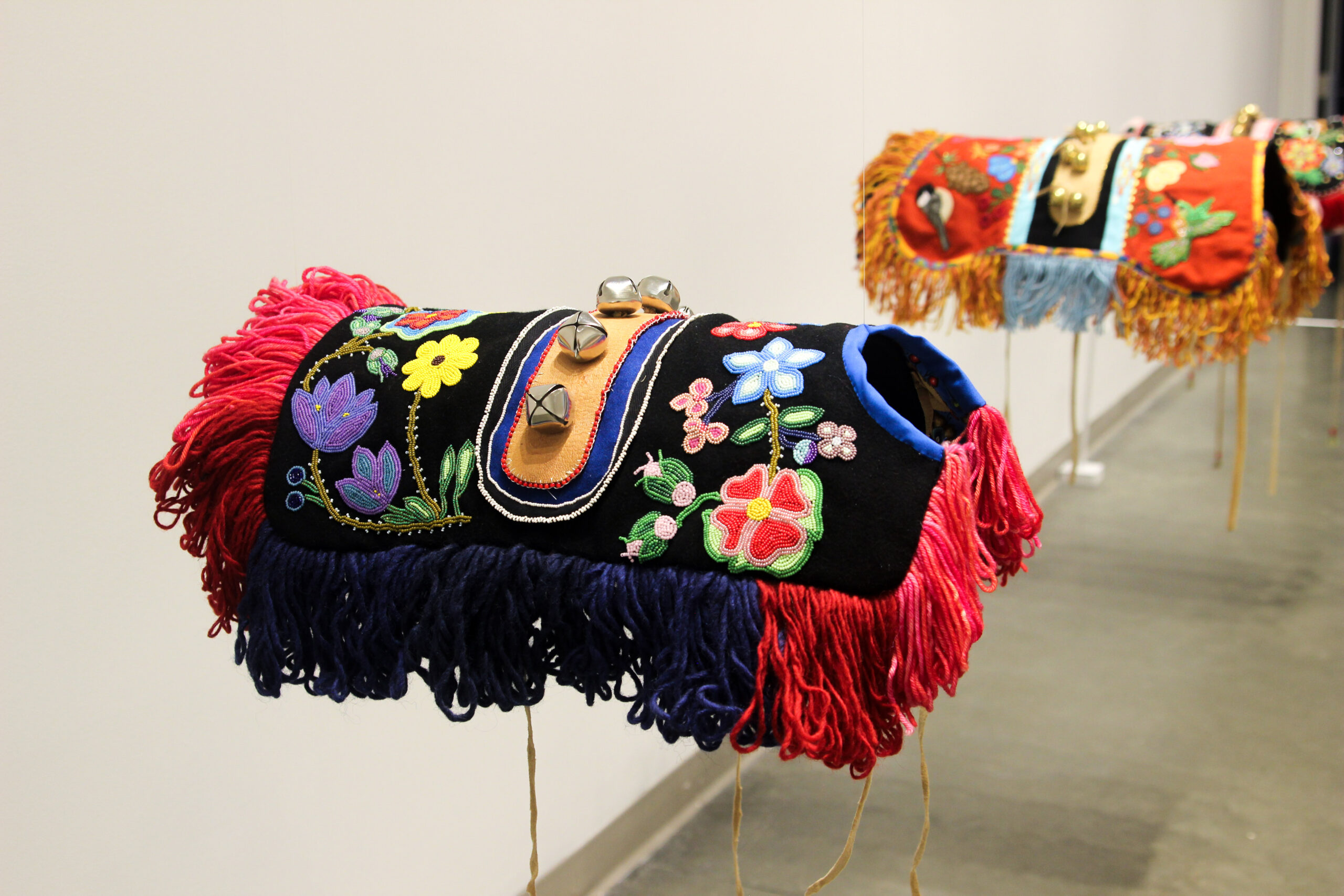
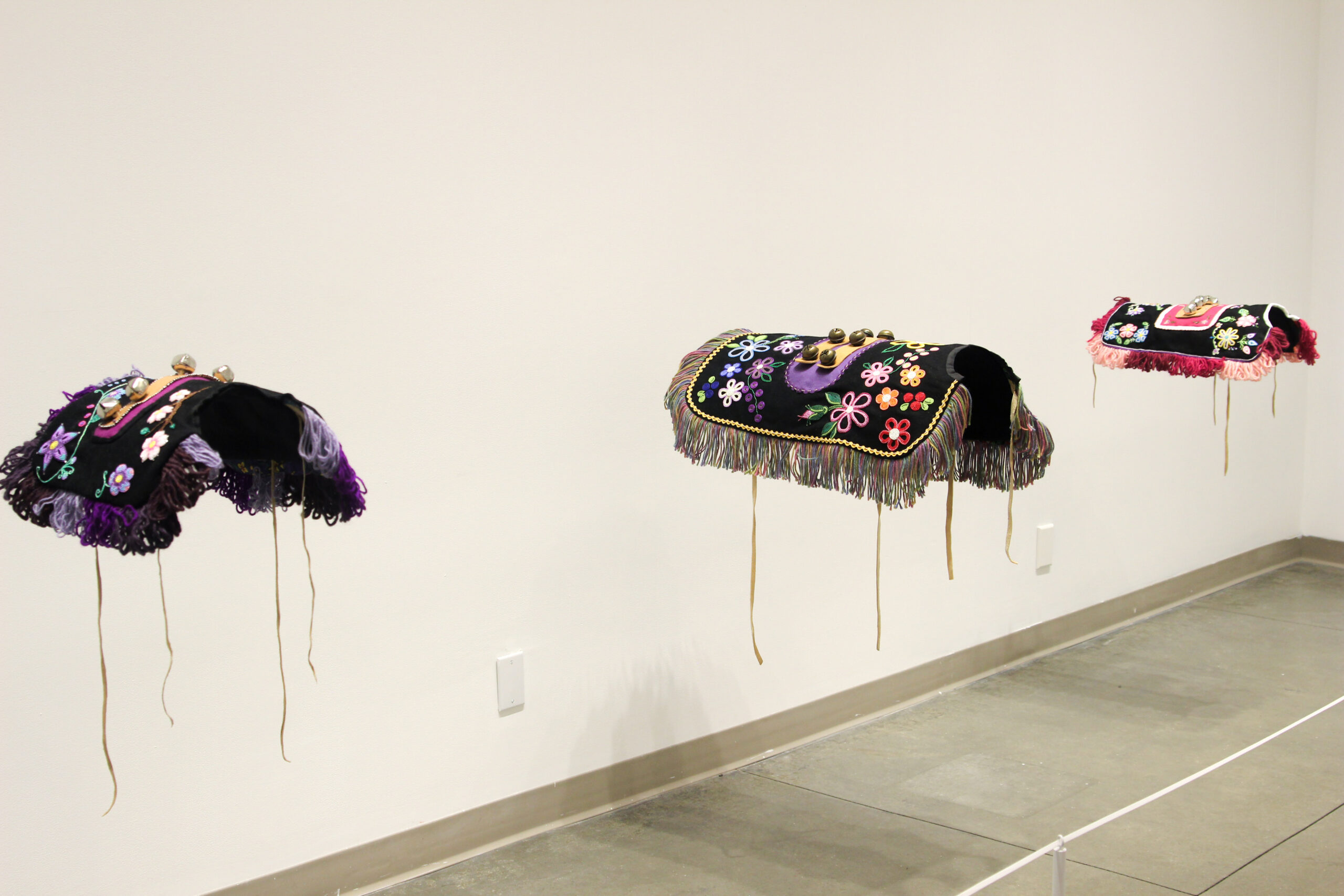
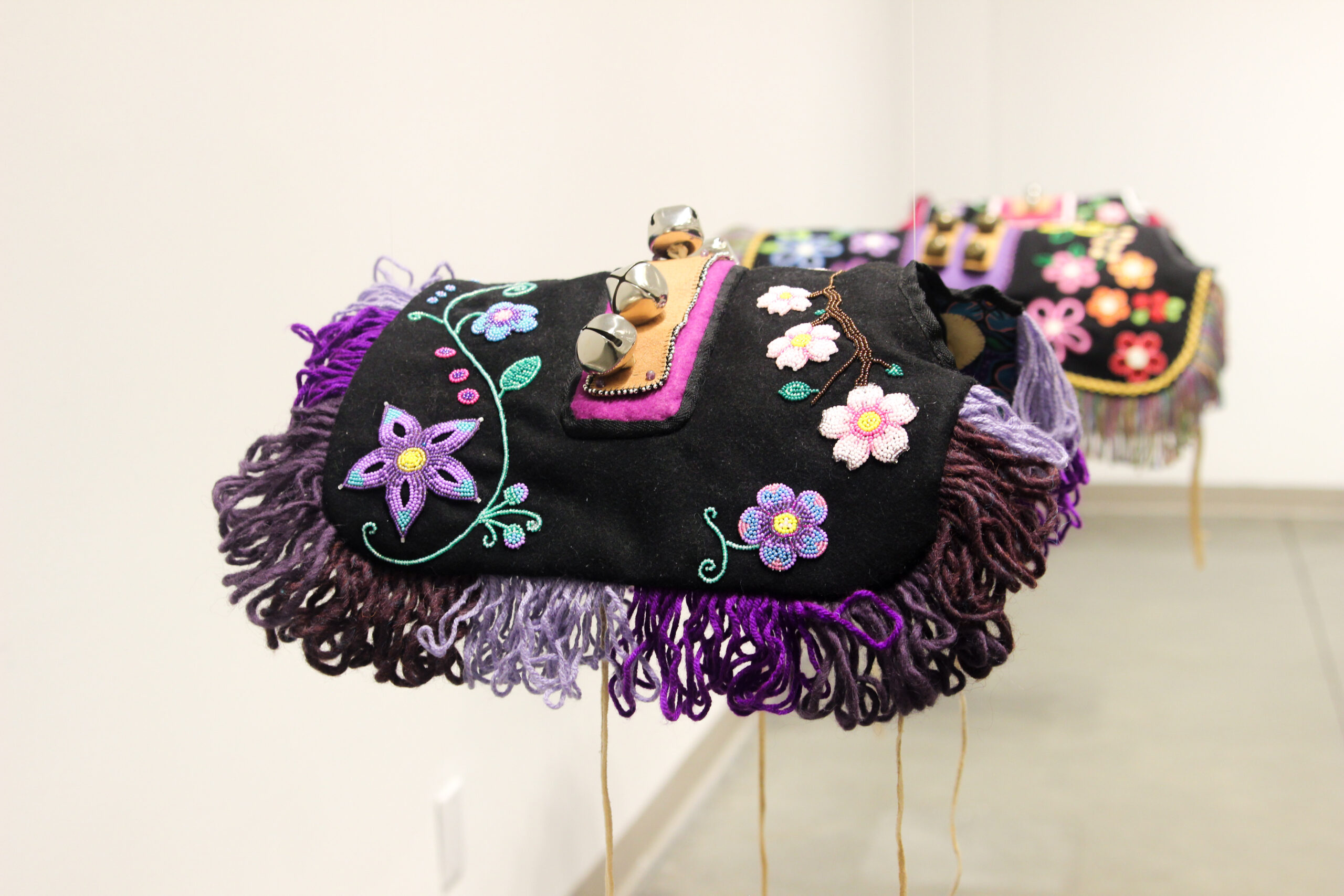
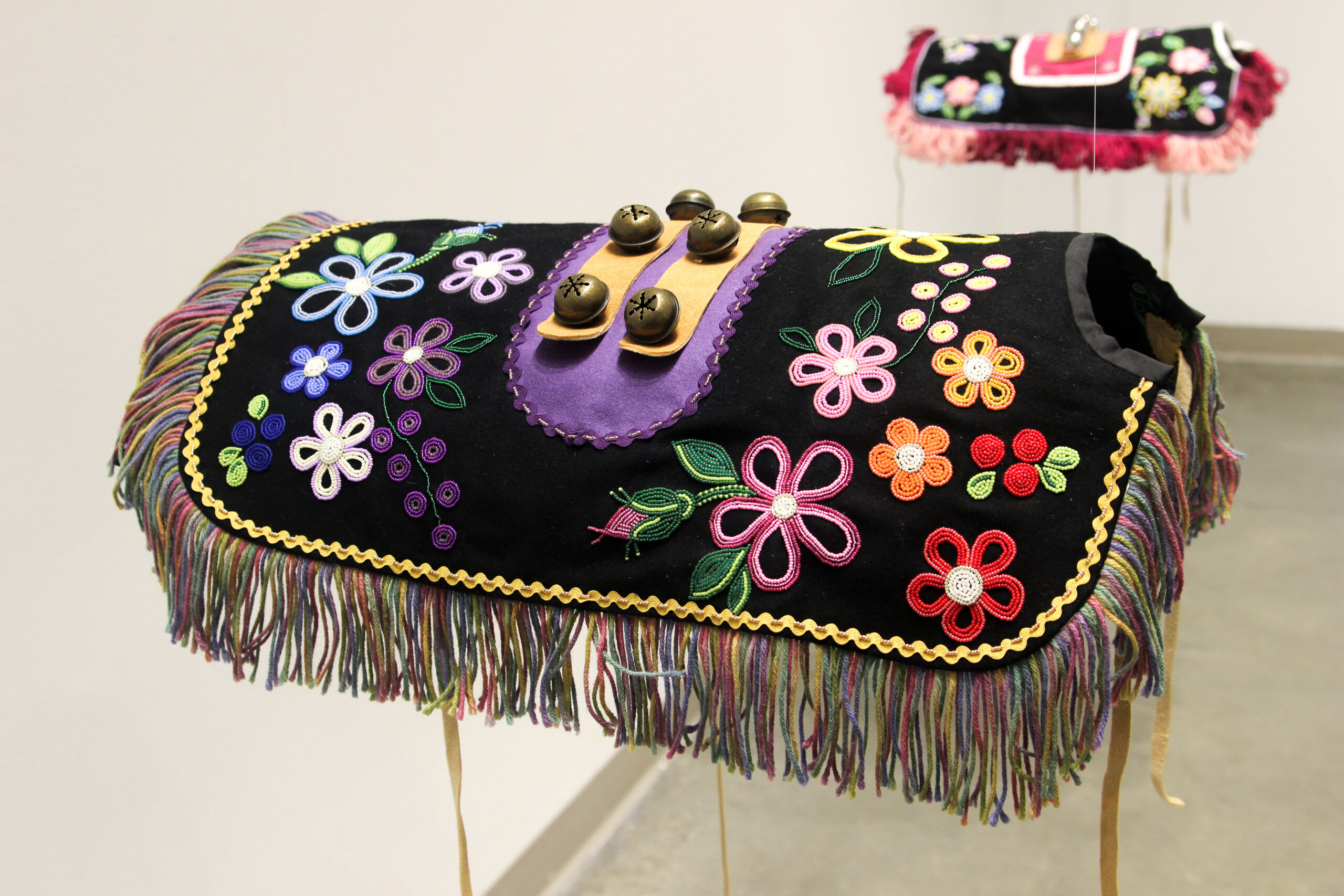
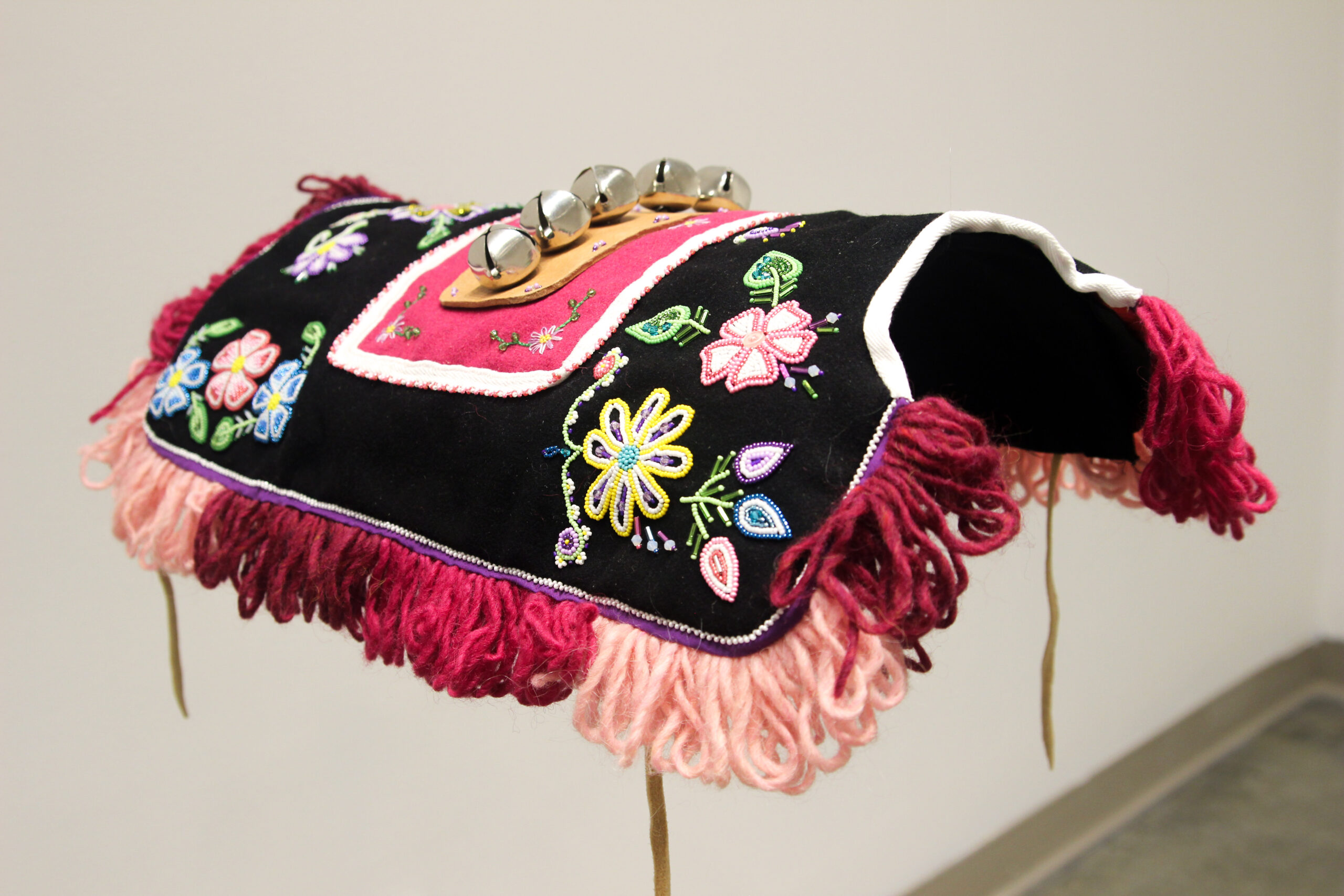
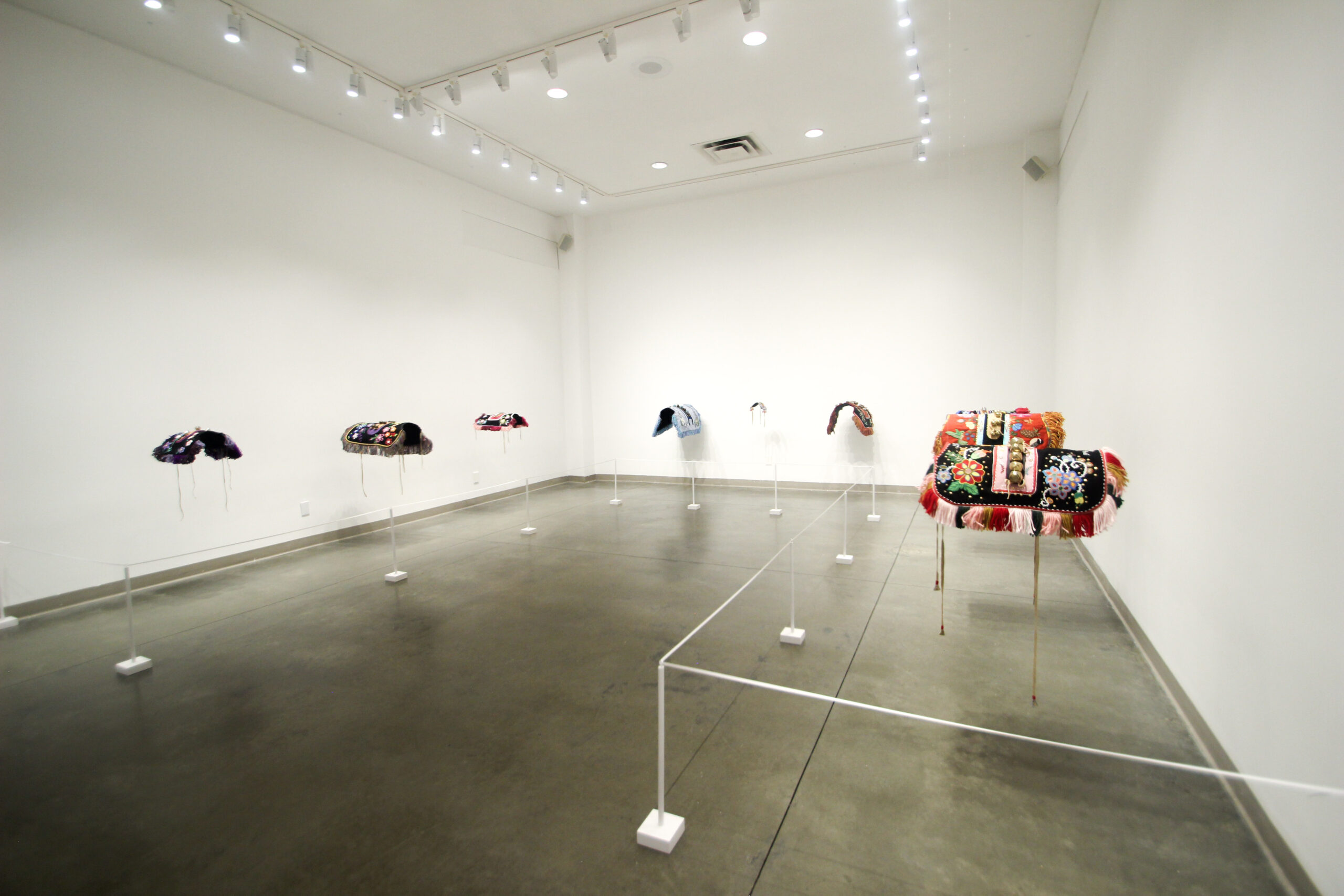
Originating from the Métis, Northern Cree, and Dene communities, ‘li Tāpis’ (small carpet) named by the French Michif and known as ‘tuppies’ by the English and Scottish Michif, are dog blanket regalia created to celebrate dogs. Tāpis are made from wool and embellished with intricate beadwork, silk embroidery, moose or caribou hair tufting, fringed with ribbon or yarn, and adorned with bells. Showing respect for sled dogs, Tāpis were draped over the backs of dogs.
The blankets served many purposes in the Northern prairies: they were used to keep the dogs warm, to announce the arrival of a dog team into a village, and to identify people at a distance. This highly skilled work was often undertaken by women and was a point of pride. Adele says “dogs are ancestral relatives and integral to our cultural identity. The care for, and kinship with dogs was, and still is, crucial for our survival. They helped us be strong and independent. This sacred relationship was a vital part of how we took care of ourselves and exerted our sovereignty.” Traditional knowledge about Tāpis nearly disappeared over time due to displacement from traditional homelands, the residential school system, and the violence committed against Indigenous dog breeds by the RCMP and other Canadian government officials.
Before Adele shared her life with a Malamute, an Indigenous dog from the Inuit, she was unaware of Tāpis and the important role Indigenous dogs played in her ancestors’ daily lives. After a decade-long interest in reclaiming this regalia for her community, she found an article about a group making Tāpis in the Yukon. Adele reached out to beader Velma Olsen, starting a conversation that resulted in a mentoriship.
Velma Olsen is an internationally exhibited beader of Northern Tutchone, Han, and G’wichen descent. She grew up in the small community of Mayo, Yukon, and is of the Wolf Clan from the First Nation of Na Cho Nyak Dun. Velma accepted Adele’s request and with the support of a First Peoples Cultural Council Mentorship grant, Velma and Adele worked together online for a year. Using materials passed down through four generations of matriarchs of her family, Adele spent over 500 hours making a Tāpis for her Malamute Nicimos.
Through the process of working with Velma to regain this traditional knowledge, Adele realized that most of the knowledge has been lost and it made her even more dedicated to sharing the knowledge that persists. Not just about re-gaining, but also about re-building. “This means learning and allowing for change that is respectful and responsible. The knowledge why our Ancestors did something a certain way is powerful and it connects us to them. It makes everything stronger. In this way, I hope to enrich the cultural life of mentees and our communities by returning and spreading this traditional knowledge.”
During her second online residency, Adele guided four beadworkers through the labour-intensive process of creating their own bespoke Tāpis for their dogs. “It was my dream to share the knowledge gifted to me by my mentor Velma Olsen to create more Indigenous knowledge keepers. I will continue to resist colonial erasure and make this hard-earned knowledge accessible to the communities who had these traditions stolen from them.” For each of the participants in this cohort, honouring their “more than human kin” by reclaiming the tradition of Tāpis is a powerful act of cultural resistance.
Exhibiting Artists: Adele ᒪᐢᑿᓱᐤᐃᐢᑵᐤ Arseneau, Velma Olsen, Debbie Dillon, Jaimy Fischer, Vicki Fraser, and Carrie Moran McCleary
Exhibition Reception: Sunday, September 15, 2024 from 2 – 4 p.m.
Artist Talk with Adele ᒪᐢᑿᓱᐤᐃᐢᑵᐤ Arseneau: Sunday, December 8, 2024 at 2 p.m.
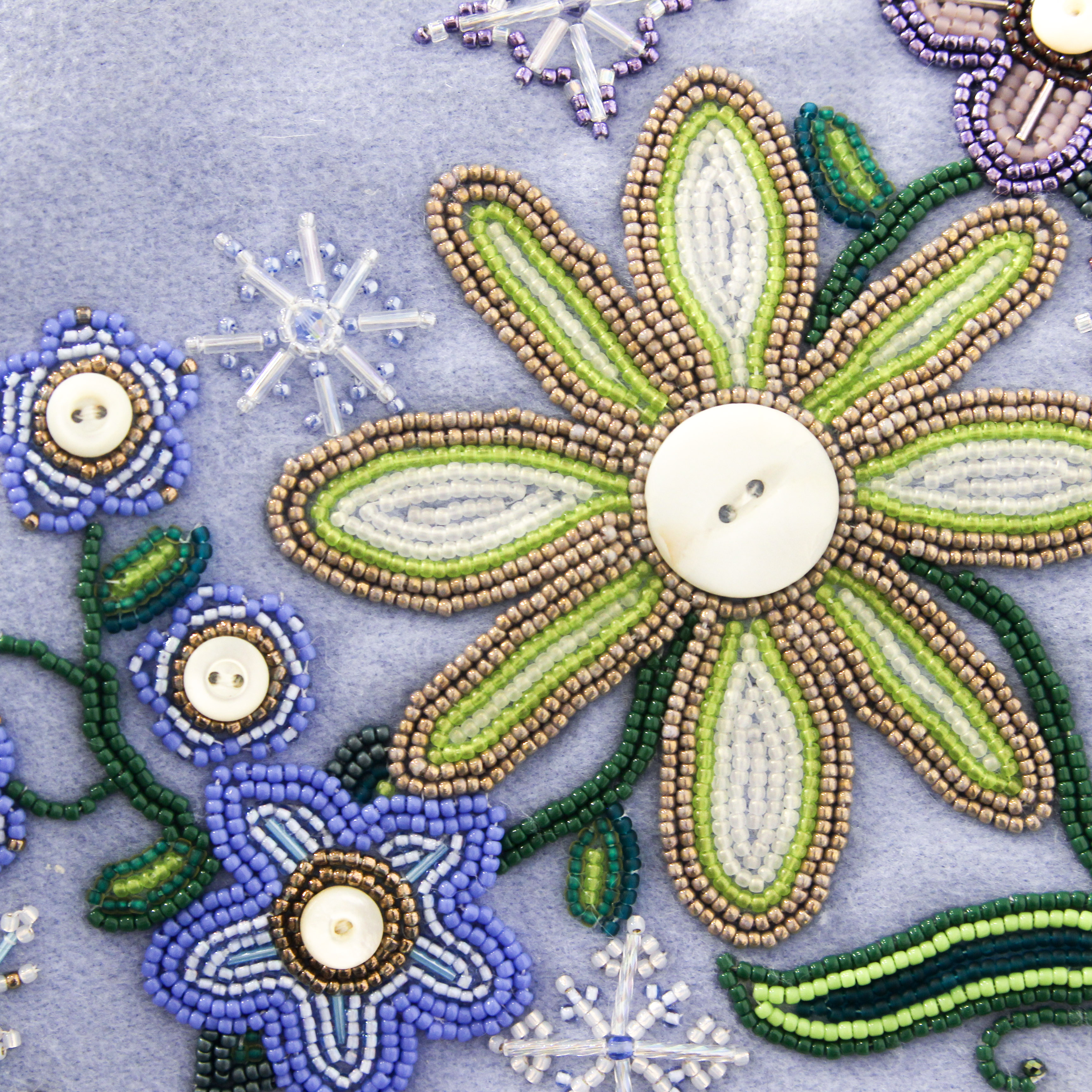
She grounds her artwork in story, engaging audiences by weaving connection to cultural, social and environmental issues. It was the way her family taught her to learn and share knowledge. Displaced from her family’s traditional territory of Northern Saskatchewan, Adele grew up with the Dakelh (Carrier) people of British Columbia in Prince George, and Fraser Lake. Moving away from the traditions of her adopted family while journeying towards those of her biological family. She carves cedar, beads contemporary and traditional Métis and plains style beadwork, creates hide
textiles and digital art. Adele completed the Reconciliation Carving program at Langara, apprenticed with Master carver Xwalacktun of Squamish Nation, and holds diplomas in both Fine Art and Graphic Design. In 2019, she finished a hide tanning residency with Fern and Roe and continues to mentor upcoming hide tanners.
“My work is about stories and sharing awe through detail. We are the stories we hear and tell each other, this is our world. Through story we find connection, and relation to one another’s experiences.” This is my language, these are my stories.” Kininaskometin/Maarsii (thank you), ᒪᐢᑿᓱᐤᐃᐢᑵᐤ
My family always had a special relationship with dogs. My father told me about his family having a team of dogs in Batoche, using them when they moved from St. Francis Xavier in Manitoba in addition to using horses, and oxen. Unfortunately, they met an untimely end when the Lower Canada Government wished to annex the lands of Manitoba and seen the Metis and Natives as “problems” to be gotten rid of.
In May of 1885, my great great grandmother Marguerite (Dumas) Caron had to dispatch her dogs to ensure the safety of her and all the other women who remained in Batoche during the Resistance. They had to hide in fox holes as Middleton’s men went through Batoche, burning homes and taking oxen and horses, they couldn’t let the dogs expose where they were hidden. A very sad time in the history of my family. Despite that we rejoiced in our relationship with dogs.
It is with sadness, Nicimos passed to the spirit world before his blanket was completed and photos of him adorned with this labour of love could be taken. Kisakihitan Nicimos, kakika mina kakika.
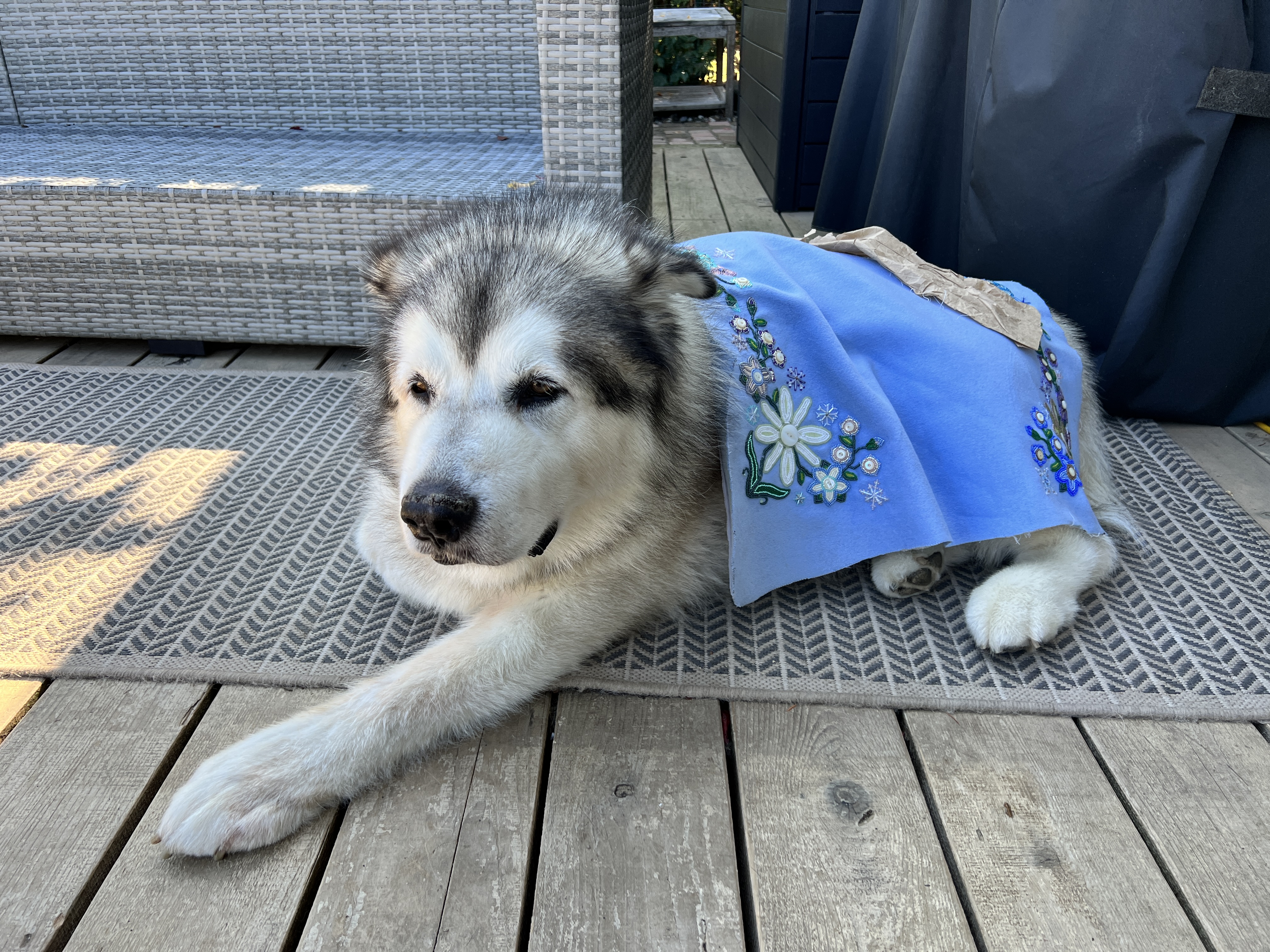
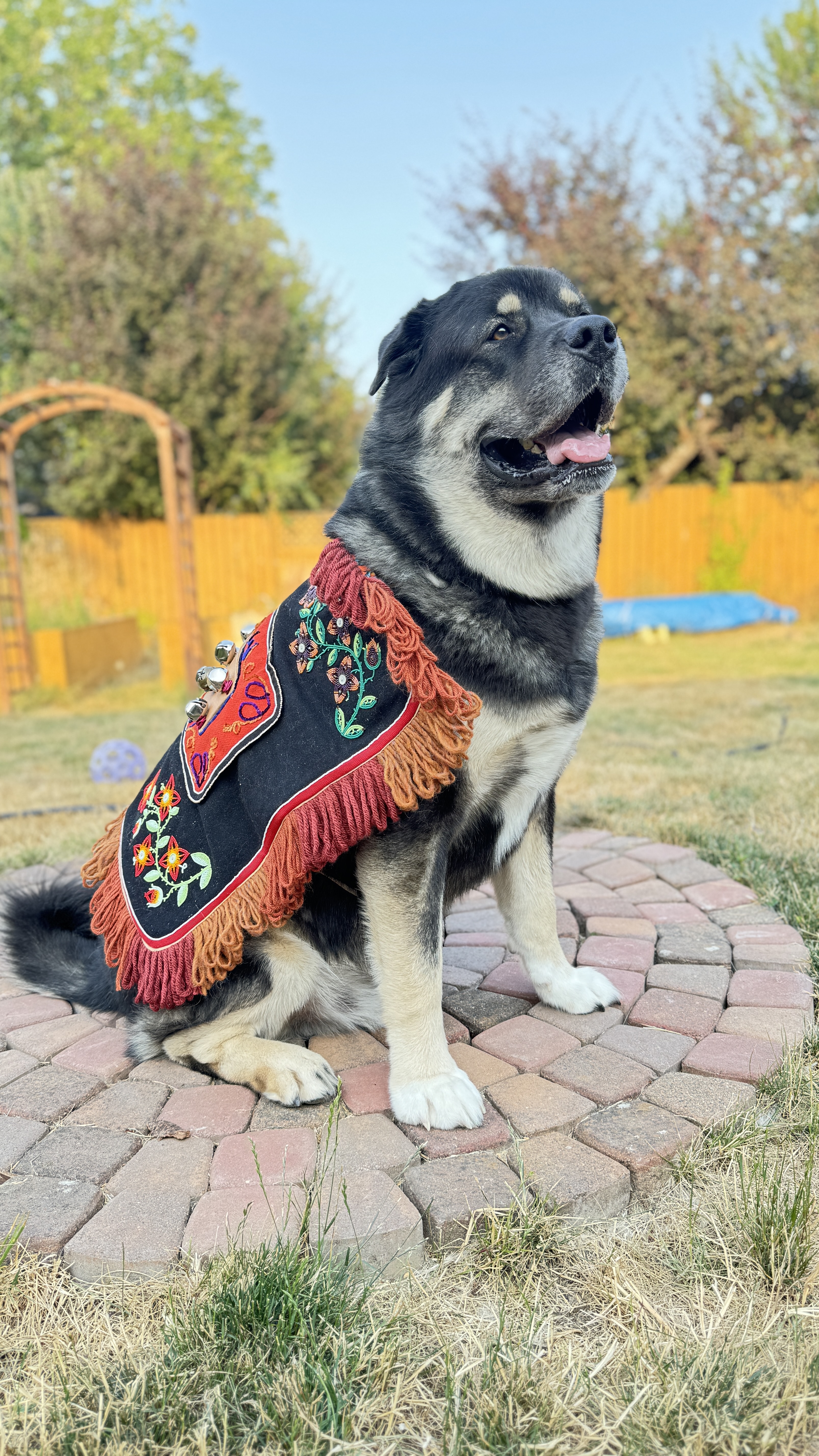
In the Michif culture, offering to make dog blankets for a fellow’s dog team was considered a proposal of marriage. My husband and I like to joke about this. My husband was the one who brought Malemute’s into my life and because of our first malemute together, we ended up married.
Maskohkan is a our third Malemute and a real treasure. He brings us both much joy with his affection, loyalty, and enthusiasm to always explore the world or be up to new things. If my health had been better while he was a pup, I would have definitely trained him in pulling. It’s always interesting to witness the struggle within him as he deals with the traits he inherited. An interest in being friendly with others, while also managing his protectiveness in keeping others away.
His blanket is a mix of traditional antique materials and techniques. It includes antique chenille yarn embroidery that I inherited, designed with hearts and the letter M as a love letter to my dog and my family member. I’d like to think, my gg-grandmother would be proud of me and my efforts in trying to revitalize these traditions. This blanket is different from my first as it was used to teach the inaugural cohort of Tapis makers. It is my hope these traditional teachings become revitalized and continue to grow within our communities. The color palette of black and red is the journey of both sides of my family, as they passed through the fires of difficult times and continue to thrive. Growing and adding beautiful things to the world despite all of the difficulties we had to pass through and the challenges we continue to face.
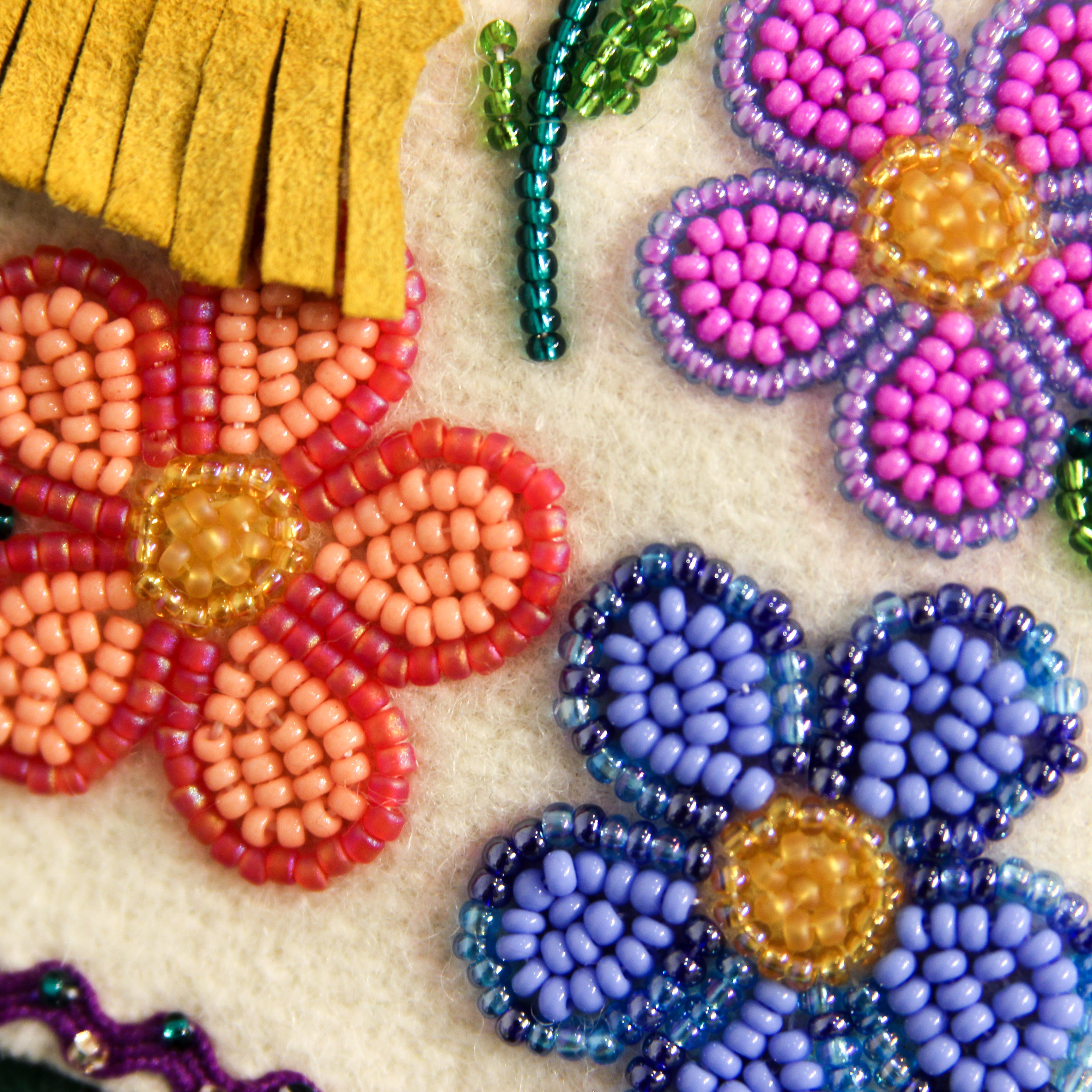
Growing up, Velma admired her mother and grandmother’s skill in beading and sewing as they crafted exquisite slippers and moccasins for loved ones, and to sell. In 2015, Velma’s journey into beadwork began when she fashioned a First Nations graduation dress for her oldest child. Subsequently, she joined a collective of artists tasked with creating dog blankets for a Yukon Quest dog team, a tribute to First Nations’ history.
“Adele invited me to mentor her as we ultimately aimed to revive this nearly lost art form. Embracing this role, despite my initial uncertainty due to a lack of experience as a mentor, proved to be a deeply enriching experience. Adele became a significant role model and teacher for me, and she taught me so much in return.”
Delving into her ancestry, Velma discovered that her grandparents relied solely on dogs for travel and hunting in the North during the winter months. Recognizing the importance of traditional beadwork and art which binds generations together, Velma is inspired to work alongside her fellow First Nations, Inuit, and Métis artists dedicated to reviving these ancestral arts, one bead at a time.
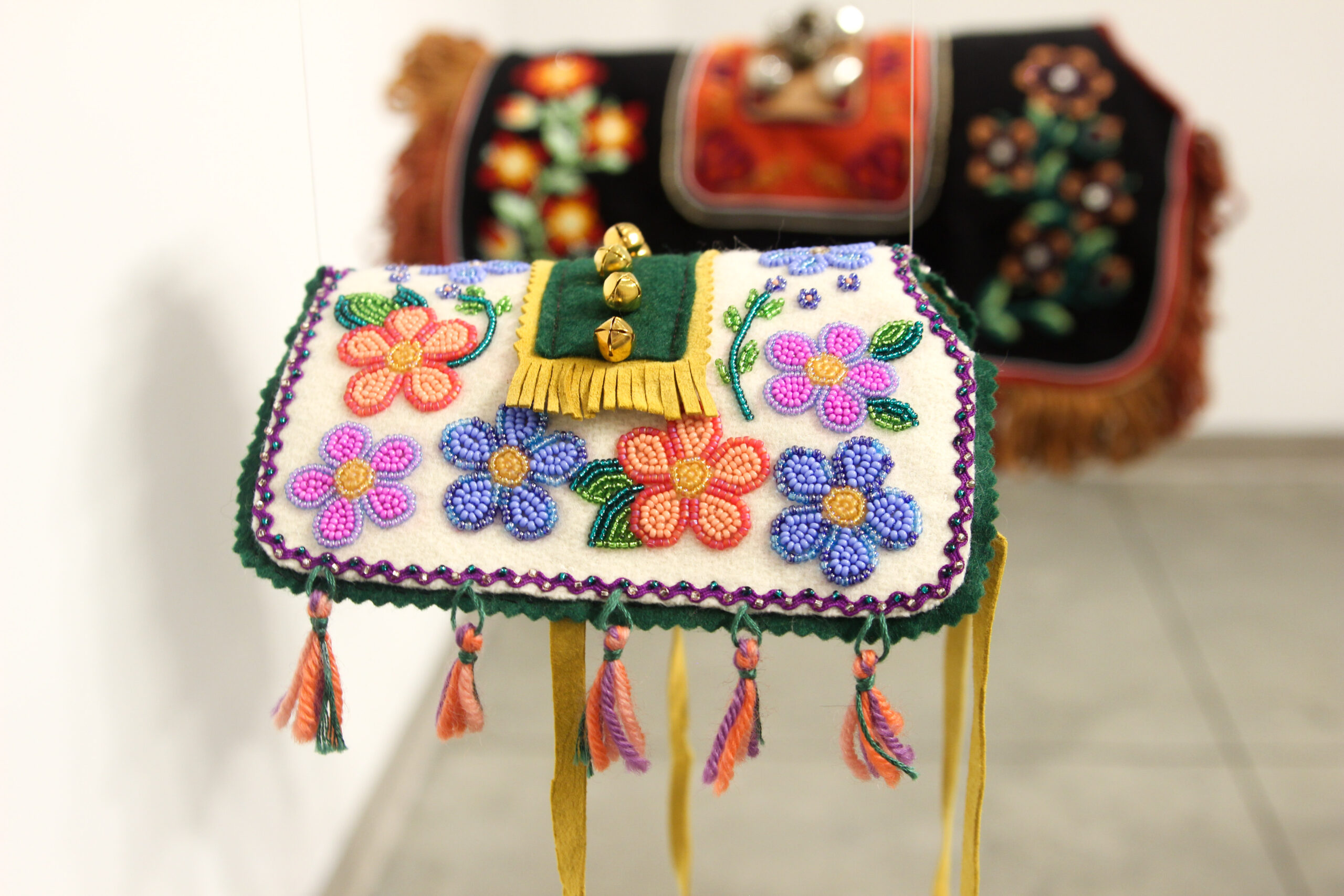
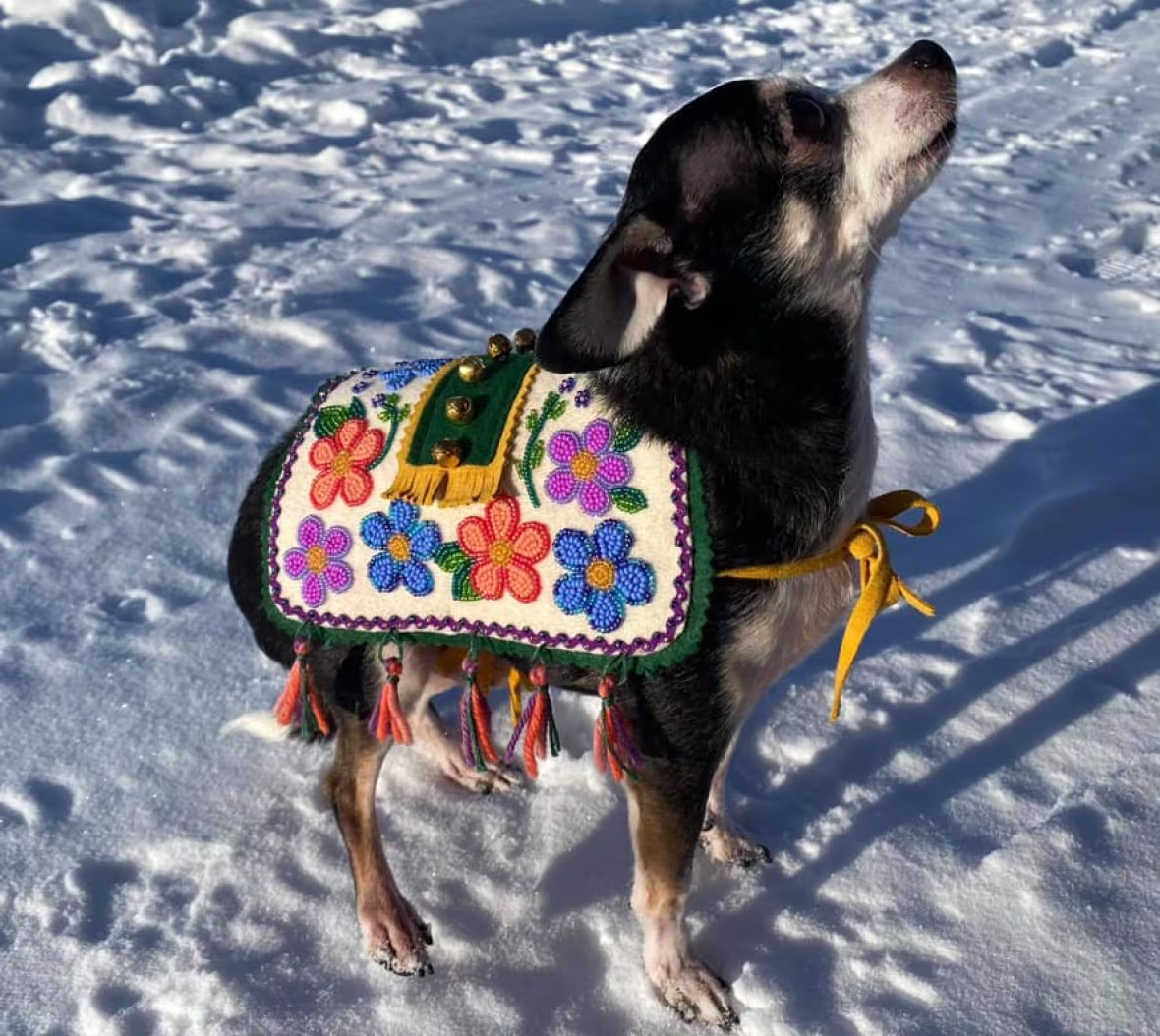
Designed as an entry for a small-town contest at a local pet store during the Yukon Rendezvous of 2019, this blanket has since gone viral on social media.
Its popularity led to features on CBC North and an article in the magazine Up North. This piece was crafted not only to provide comfort for Rikki but also to showcase the love and creativity that can emerge from our smallest companions.
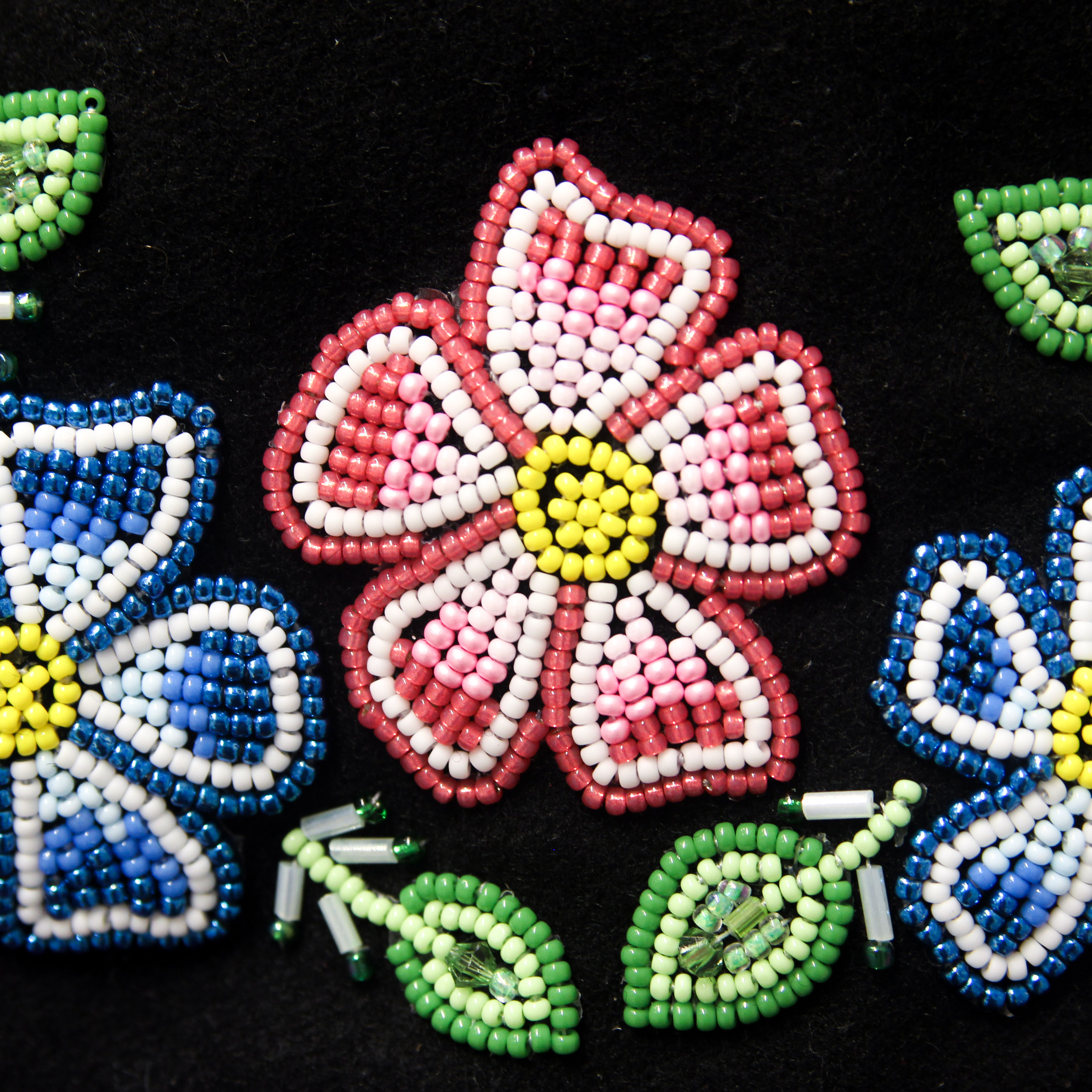
is a self-taught Inuvialuk artist from Inuvik in the Northwest Territories. She comes from a diverse background of Inuvialuit (Inuit), Gwich’in, Cree and Métis heritage which is represented in her original designs. Inspired by her ancestor’s traditional art and clothing, Debbie also incorporates modern techniques and materials in her pieces. Beading has instilled a desire for creativity, taught her patience, and been therapeutic in her journey of learning and healing though culture.
Debbie’s passion for creating began in 2014 and has ignited an enthusiasm to learn both traditional and modern arts. Over the years, she has learned to make beaded moccasins, traditional snowshoes, fur hats and mitts, tufted earrings, quillwork earrings, mini- Métis sashes, and sealskin broches.
Debbie dedicates her dog blanket, Arctic Rose, to her great-grandfather Andrew Kunnizzi. His dog team was a lifeline for transportation for his family, food, and supplies and was part of the historic re-make of the Dawson Patrol. Her blanket represents the Arctic Rose that is commonly found in the North. Debbie plans to carry on her teachings with others who may be interested in revitalizing the traditional Tāpis.
She likes her fur to be vacuumed and she is a great spider and bug hunter. She has a favorite pair of slippers but she will fetch slippers and present them to whoever comes through the door.
She has two cat sisters, Onyx (who she loves) and Mynx. Chocolate is a very energetic, funny and loving dog who likes to give Chocolate kisses.
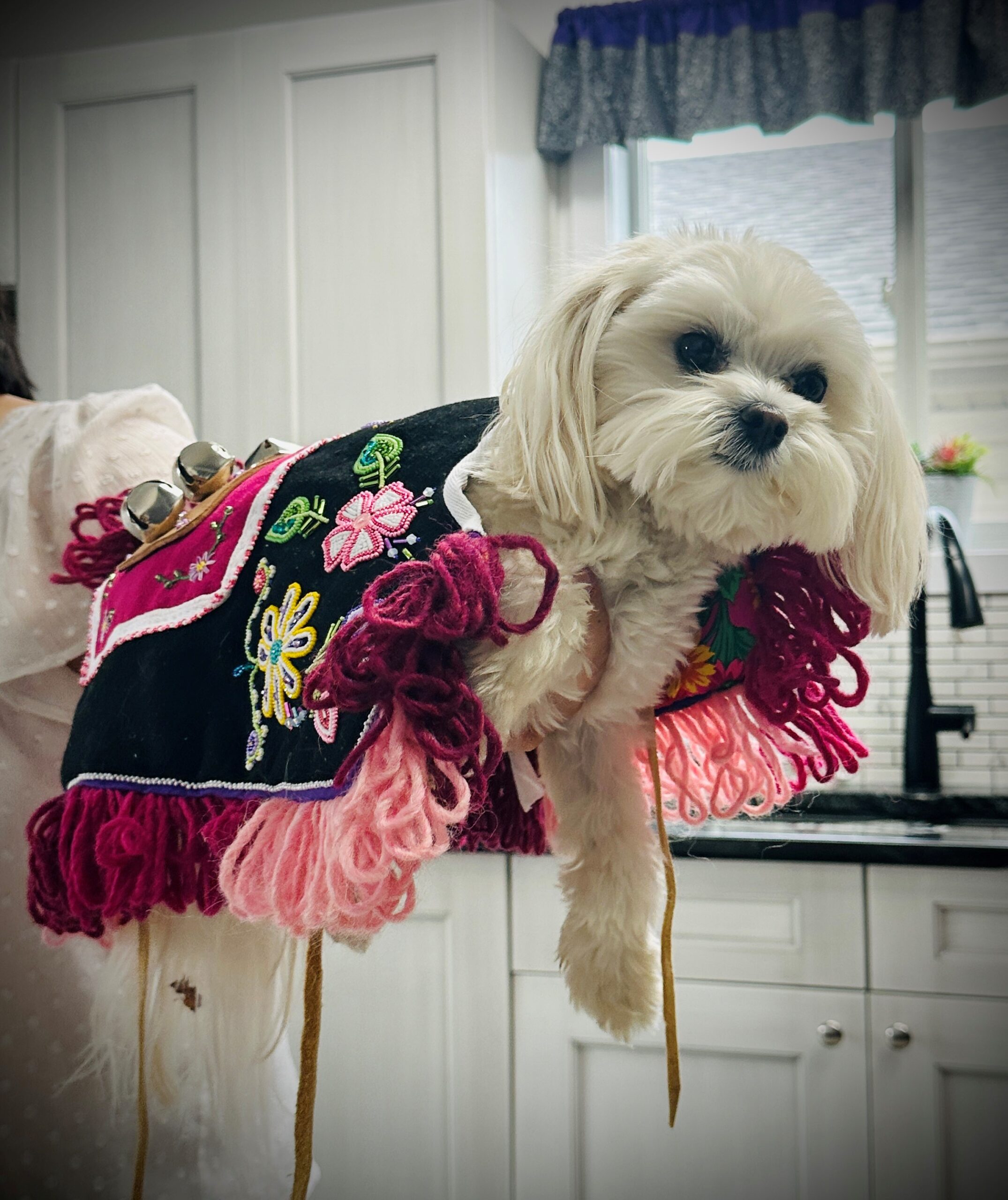
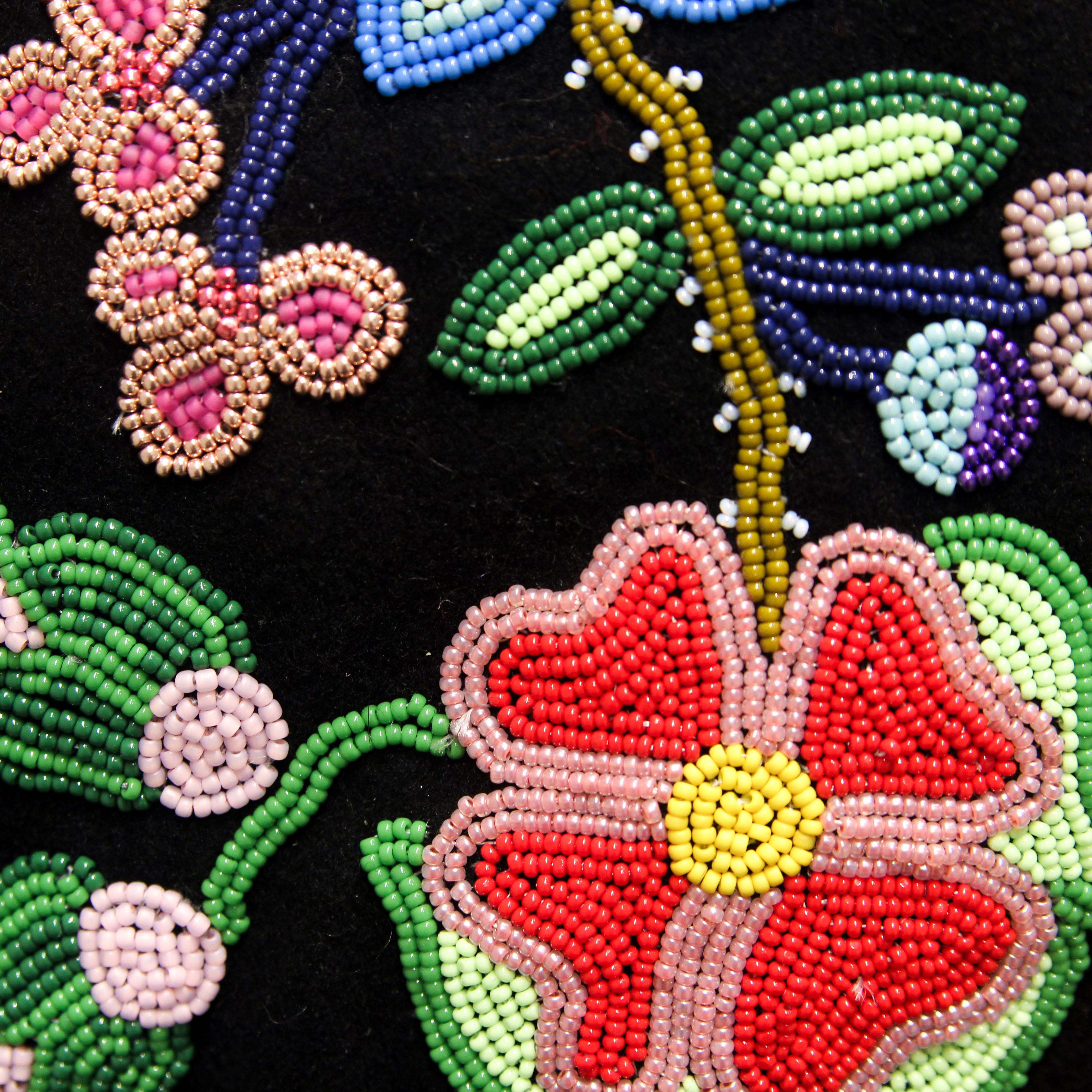
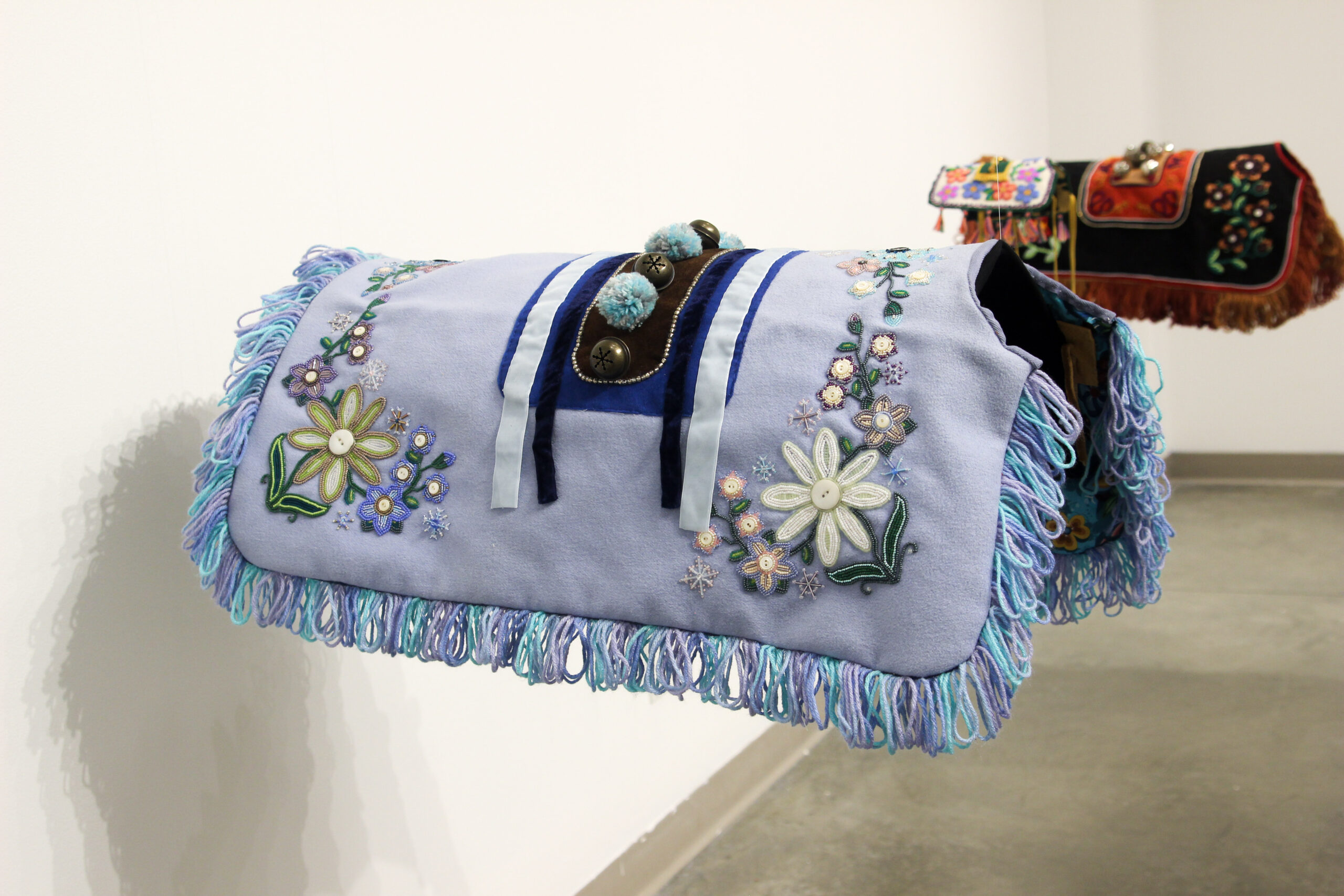
“I joined the project as a transportation researcher and budding artist, drawn to the Tāpis as a representation of traditional forms of Indigenous mobility and a deep love for canine kin. The residency has linked me to my culture, community, and inspired a passion for blending creative expression, history, and education.
When this project began, I put tobacco down to seek clarity and guidance in the work. My creation emerged from dreamings and imaginings that flowed through me, guided in part by my dog Pepper, my constant companion, and the matriarchs in my lineage, including my great-great grandmother Domithilde Huppé, 3rd great grandmothers Isabelle St-Germain and Catherine Perreault, 4th great grandmothers Henriette Landry, Joséphe Primeau, Joséphe Cyr, and Catherine Grouette, and my aunties and heroines of the Resistance Marguerite Caron (née Dumas) and Christine Pilon (née Dumas). This project fulfills a long-held desire to manifest a realization of my artistic vision through blood memory, ancestral guidance, and the land.”
She is a sassy girl who is about 70 pounds of pure muscle though she thinks she’s a lap dog. Her pet names include ‘boo boo bear’, ‘Peppies’, and ‘angel baby princess’.
She loves to play tug, do tricks, sleep under blankets, cuddle, and has overcome adversity from a young age, having both her knees replaced by age two. She is a rescue who chose me, emerging from a puddle of her anlke biting brothers and sisters to jump into right my arms – we were kindred from the moment we met.
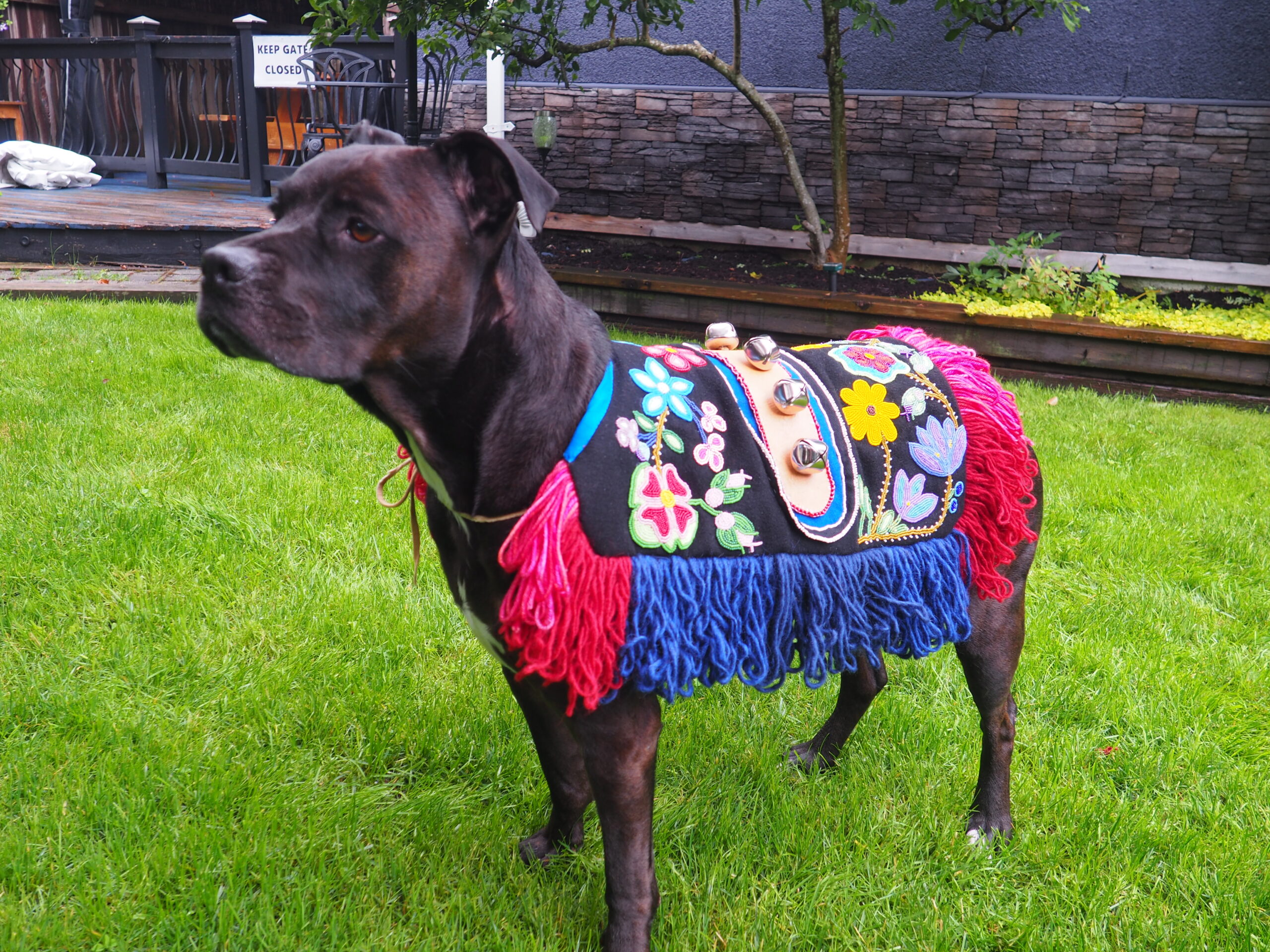
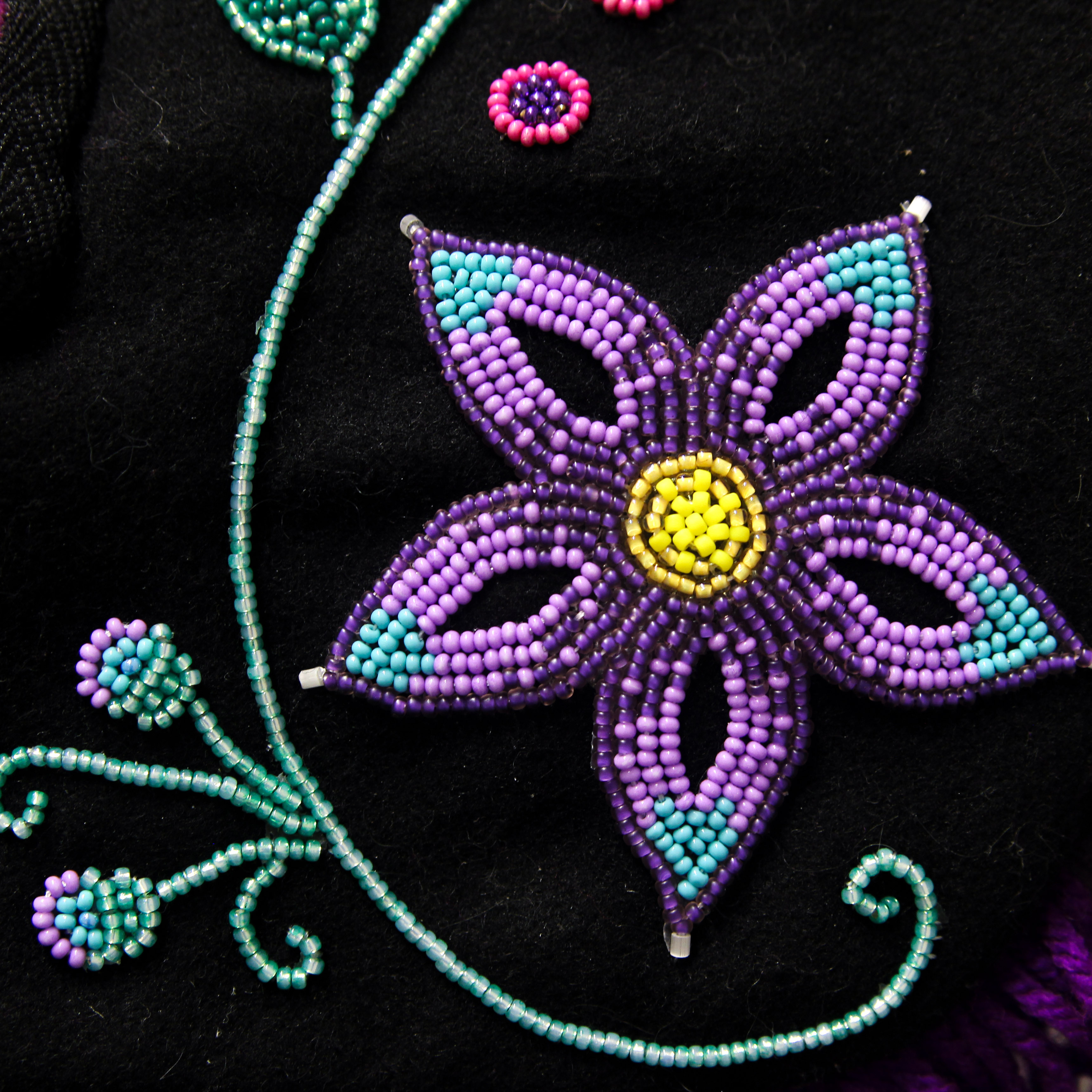
“Learning to make a Tāpis was important to me, so I jumped at the chance to take part in the residency. The opportunity to blend my desire for cultural teachings with my love for dogs was an incredible opportunity. My design was inspired by my love for the women in my family who have been with me on the journey of reconnecting with our culture, and my own sweet dog, Lexie, who is a dream come true.
My mom used three little flowers as her beadwork signature, and I included them in my design to honour her. Colours and other design elements were chosen with my sisters, nieces, and grandmothers in mind. Swooping, curling vines are signatures of my own beadwork. I was inspired by cherry blossoms and their clear indication of the change of season. My dog was also born during springtime. I hope people can feel the love and care that went into the design and construction of this Tāpis – every stitch, every bead.”
What she wants most in life is to be with her people, get scritches, and to finally be allowed to catch one of those dastardly squirrels.
Lexie has a lot of love to give, and gives of it generously every day.
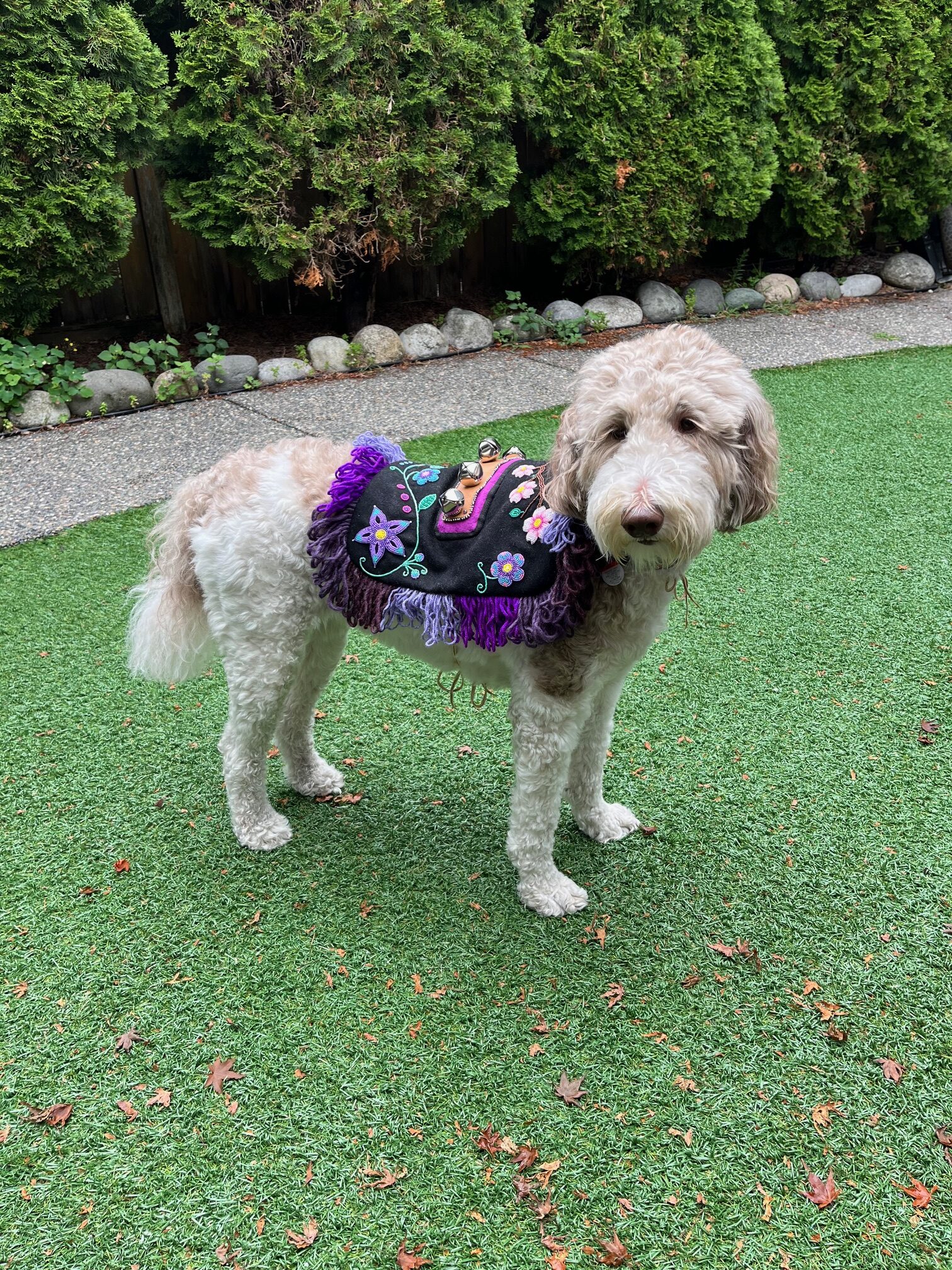
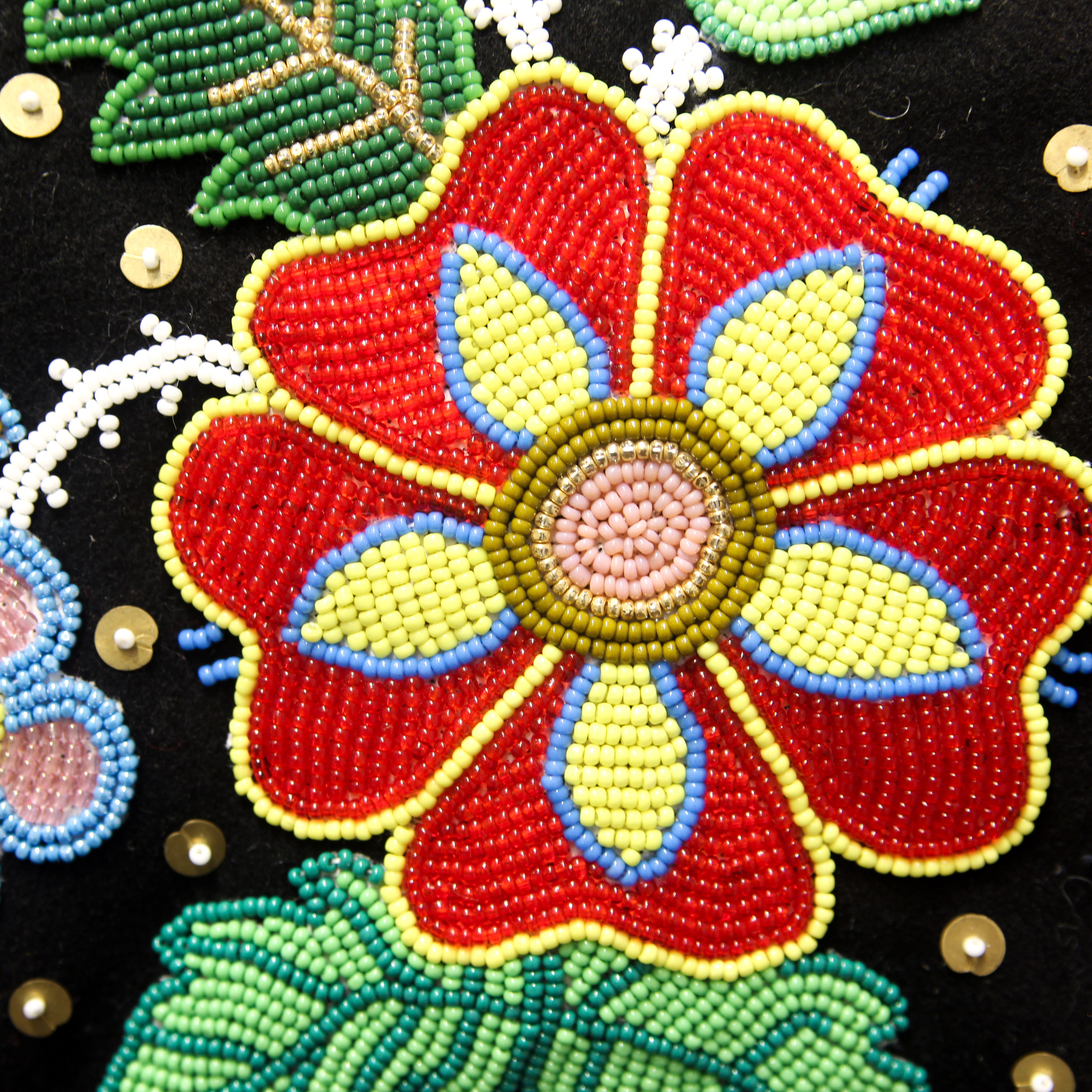
“My tuppie is the result of the survival of generations of Indigenous beliefs, art, and community values. Beading, honoring our designs and the mentorship we have experienced is an act of defiance to the United States and Canadian Governments. We have survived and we are reclaiming the tradition of creating beautiful items that honor our dogs and the folks driving them.
As Native women we spend most of our time caring for and shielding our families from harm. It is no surprise we create these blankets to bring warmth and protection to the animals that serve us. I am very grateful I was able to participate in this moment of sisterhood, which created a bond that will last a lifetime. I will take this knowledge and heartfelt kindnesses with me when I bring these teachings to my community in Montana.”
Miigwetch and love to my mentors Adele and Velma, and my tuppie sisters Vicki, Jaimy, and Debbie. Aho to my dog Zwei’s dad, Jeffery Mussetter, as well.
I’m very grateful I was able to participate in this moment of sisterhood, which created a bond that will last a lifetime. I will take their knowledge and heart felt kindnesses with me when I am able to bring these teachings to my community here in Montana.
Miigwetch and love to my mentors Adele and Velma, and my tuppie sisters Vicki, Jaimy, and Debbie. Aho to my dog Zwei’s dad Jeffery Mussetter as well.