Memory Crimes 記憶犯罪
Edward FuChen Juan 阮福辰
July 13 – August 30, 2025
Exhibition Reception: Sunday, July 13, 2025 from 2 p.m. – 4 p.m.
Paper Making Workshop: Saturday, July 26, 2025 from 1 p.m. – 4 p.m. WORKSHOP IS FULL
Artist Talk: Sunday, July 27, 2025 at 2 p.m.
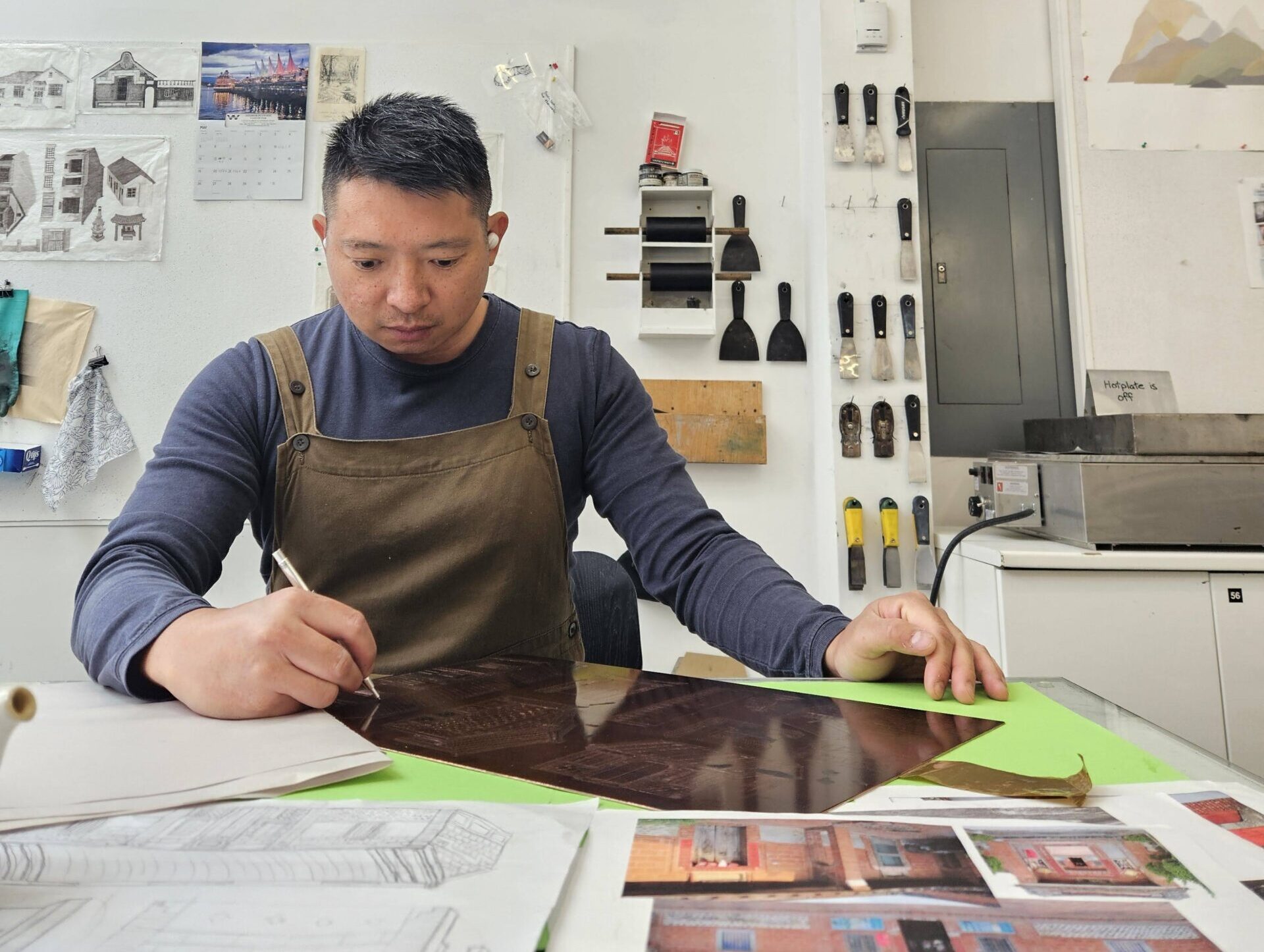
In his current exhibition Memory Crimes 記憶犯罪 Taiwanese-Canadian visual artist Edward FuChen Juan explores the impact of the authoritarian Kuomintang (KMT) government and Taiwan’s subsequent Truth and Reconciliation Commission on the Taiwanese diaspora. With this body of work, his intention is to pay homage to the victims, their lives, their survival, their descendants, and those who have yet to be acknowledged for their suffering.
On February 28, 1947, a democracy protest in Taipei ended with a public massacre committed by the authoritarian KMT government. It marked the beginning of over 40 years of martial-law dictatorial rule in Taiwan, known as the “White Terror.” During this time citizens were oppressed through acts of imprisonment, torture, and execution; prosecution often took place without trials and process. The population nicknamed the mass arrests “Thought Crimes.”
Following decades of human rights activism in Taiwan and abroad, including in Canada, the regime gradually ended with the first United Nations-sanctioned election in 1992. The 228 Memorial Museum in Taipei documents this history with photos and letters from the victims and their descendants. Among the museum’s archives, Juan discovered a photo of an executed journalist with his family’s surname, which exclusively originates from his ancestral village of Linbian, 林邊鄉. Juan consulted with members of his family and confirmed that the journalist was his great-uncle, 阮朝日. Since then, the museum has continued to release reports of other relatives who “disappeared.”
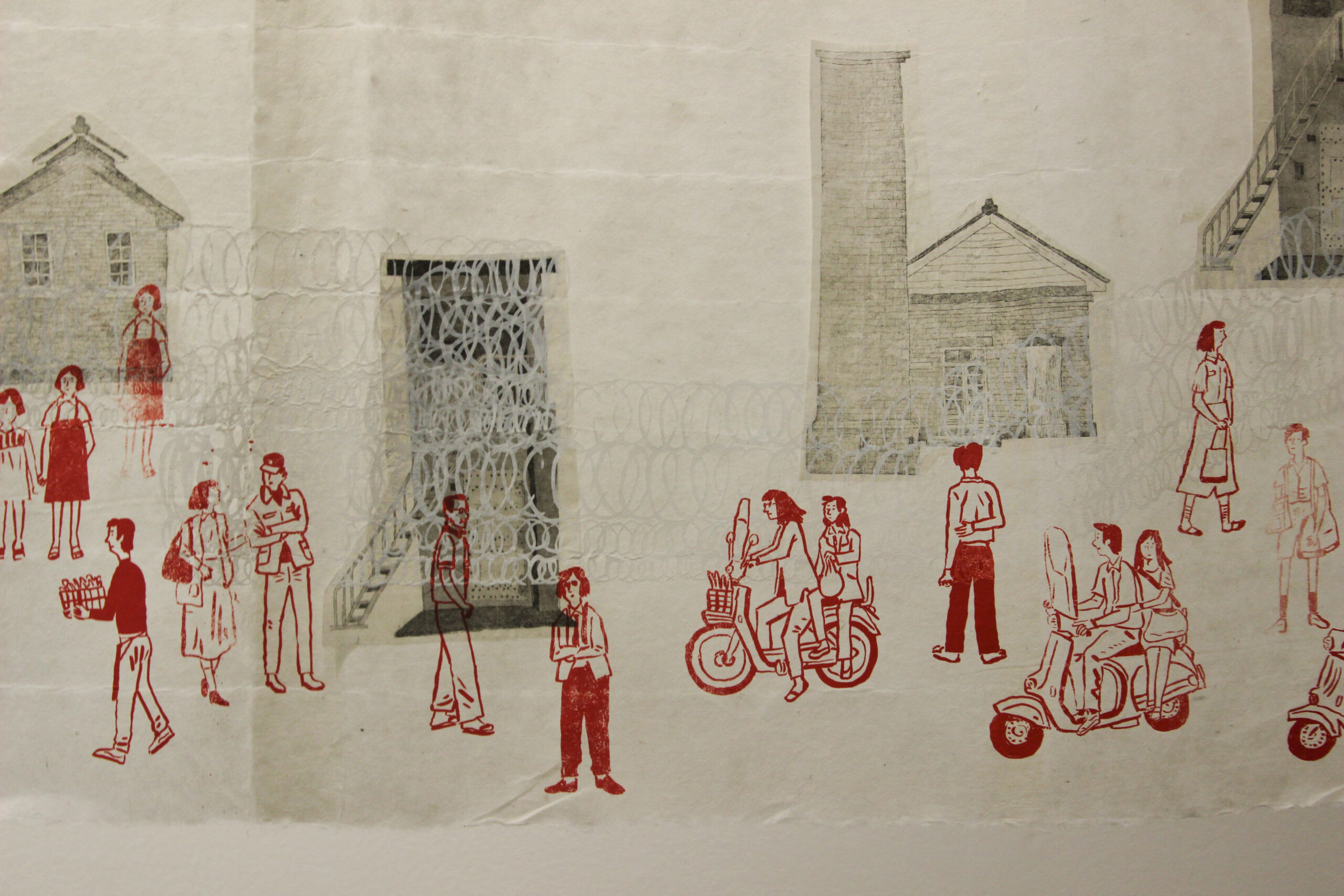
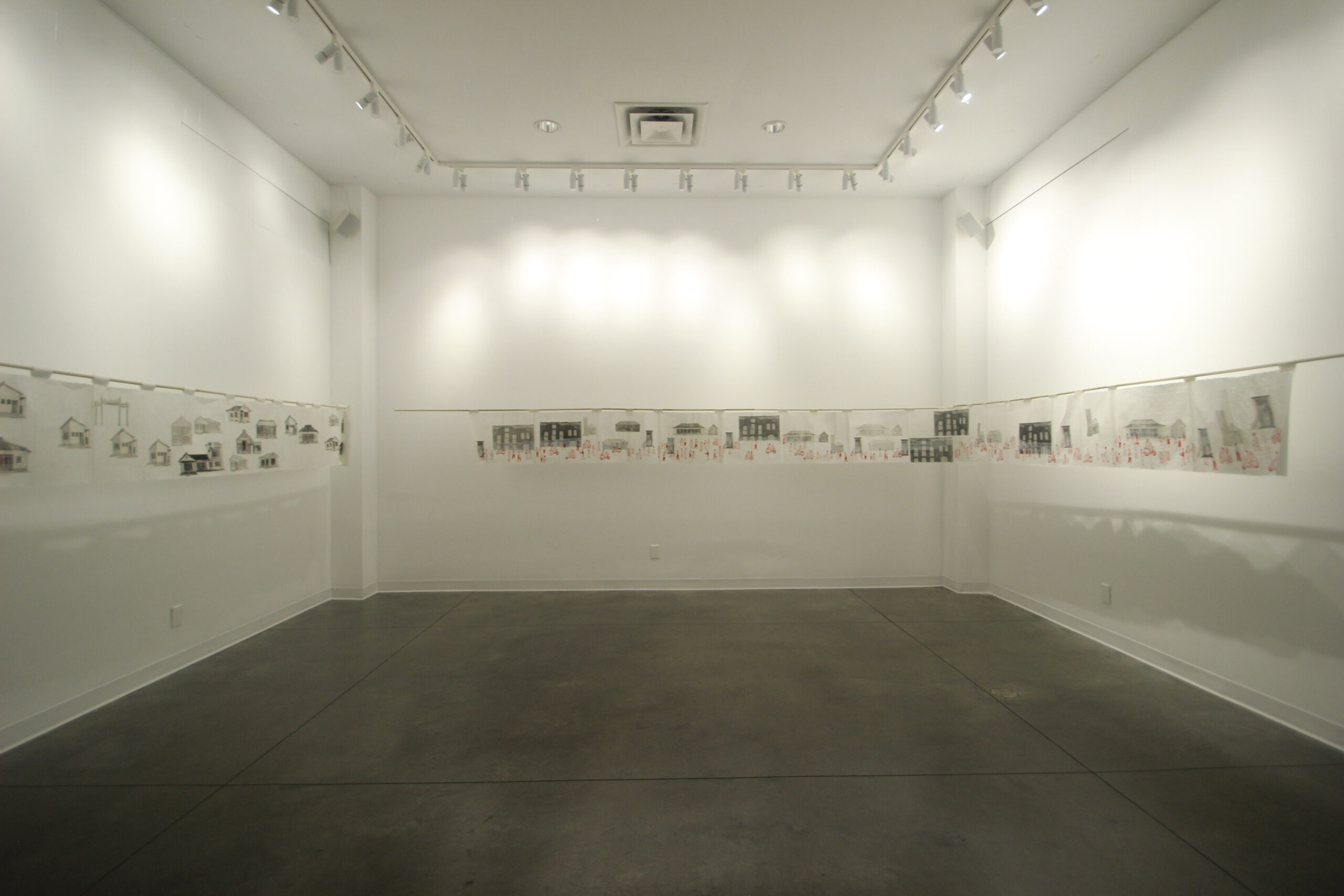
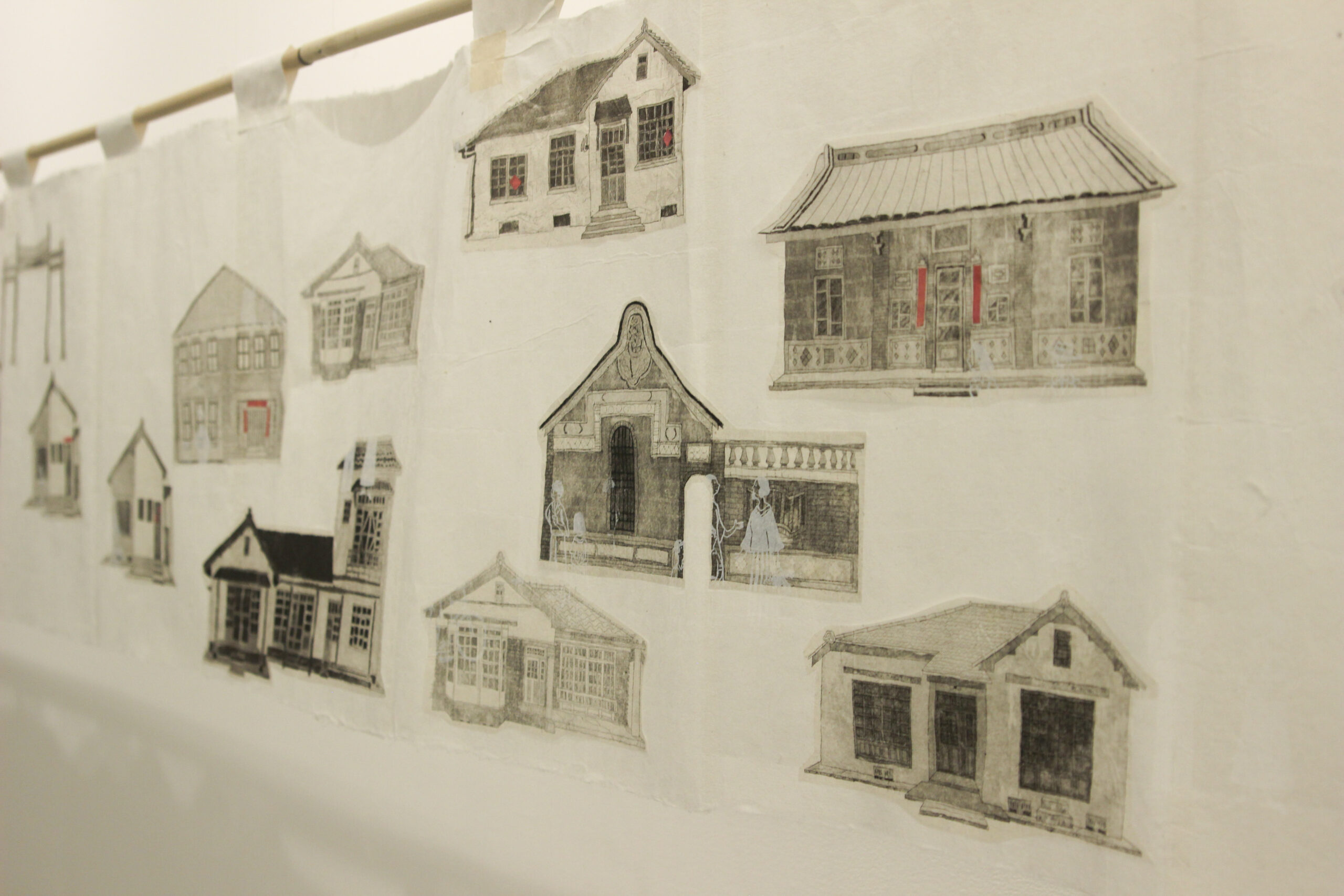
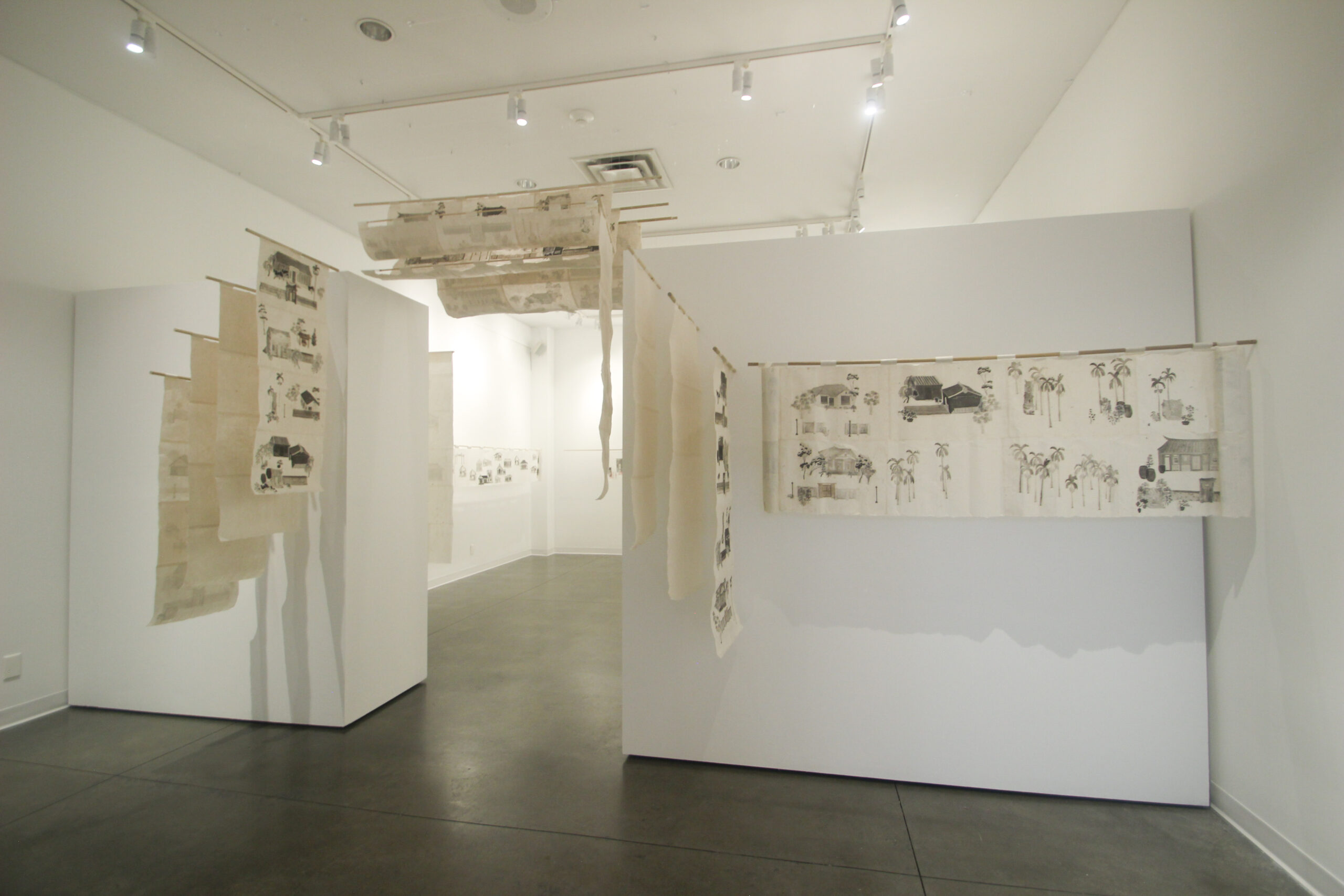
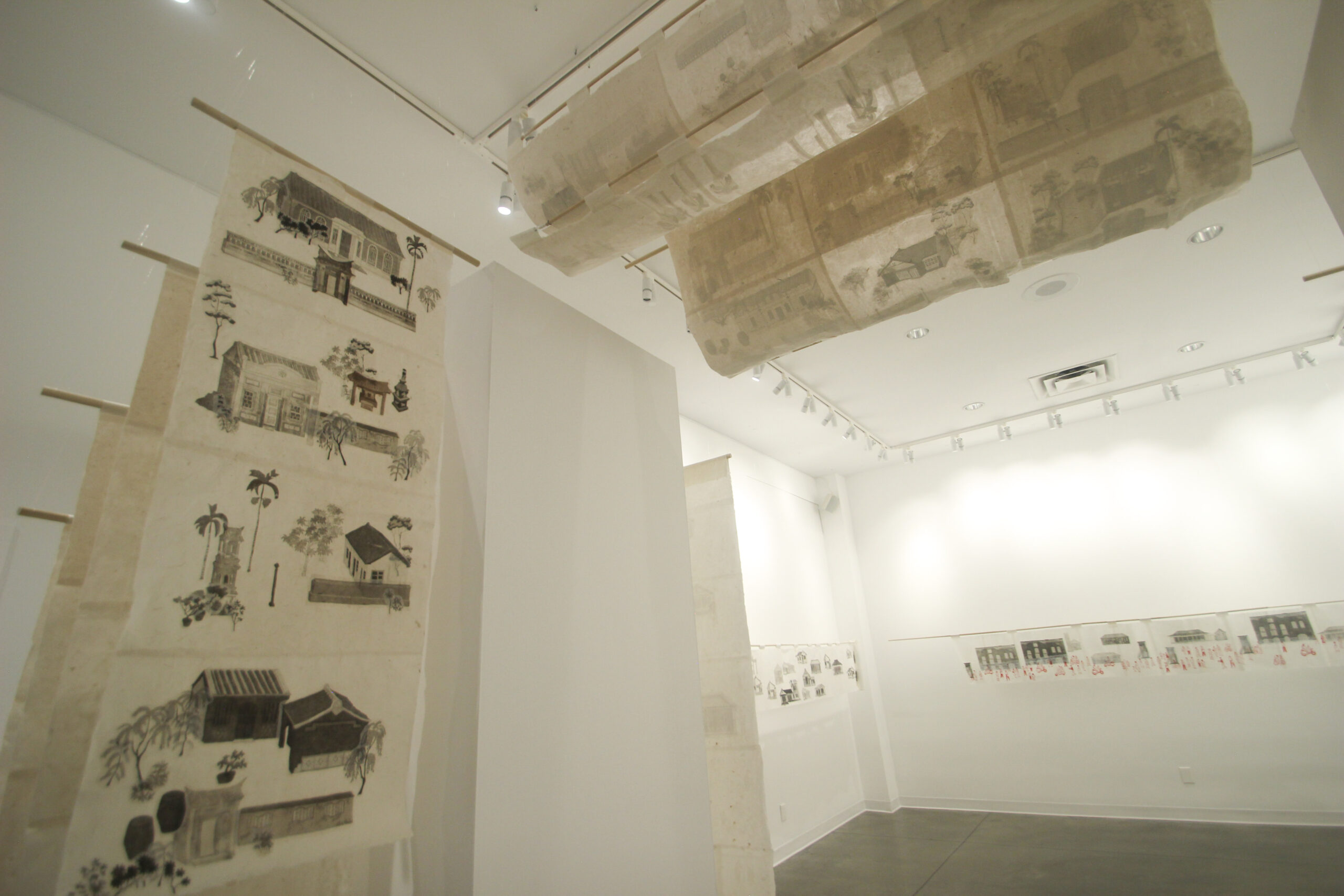
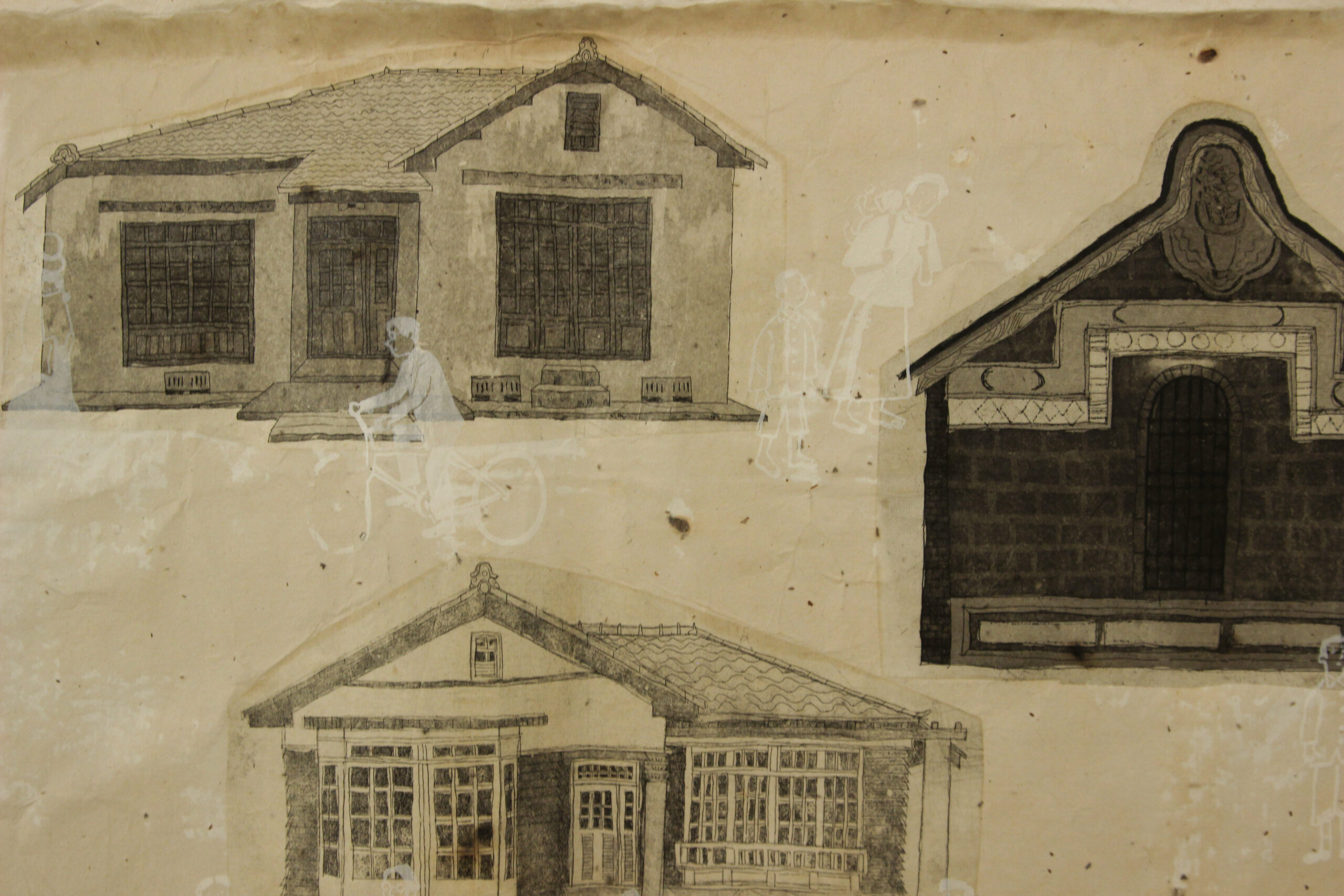
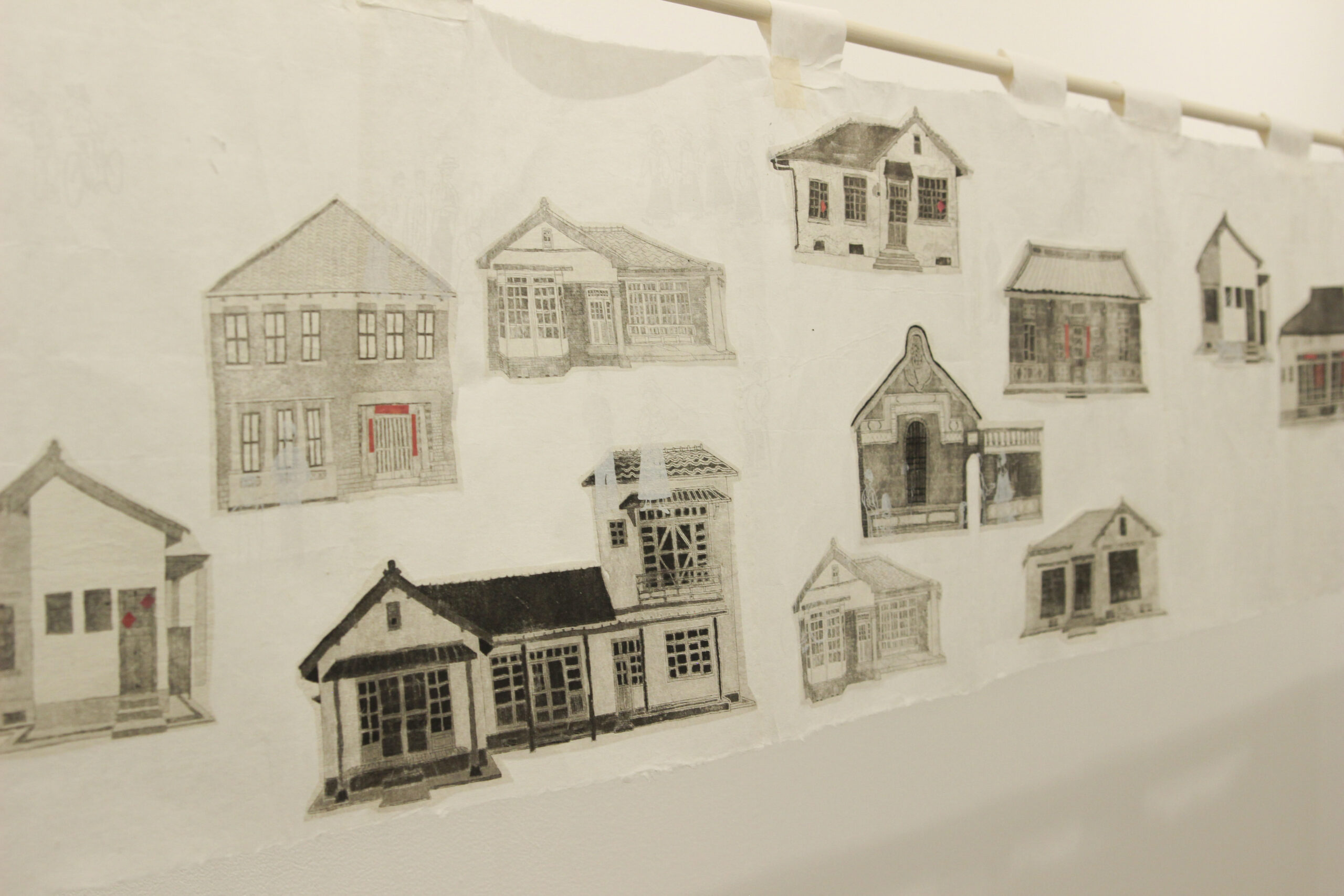
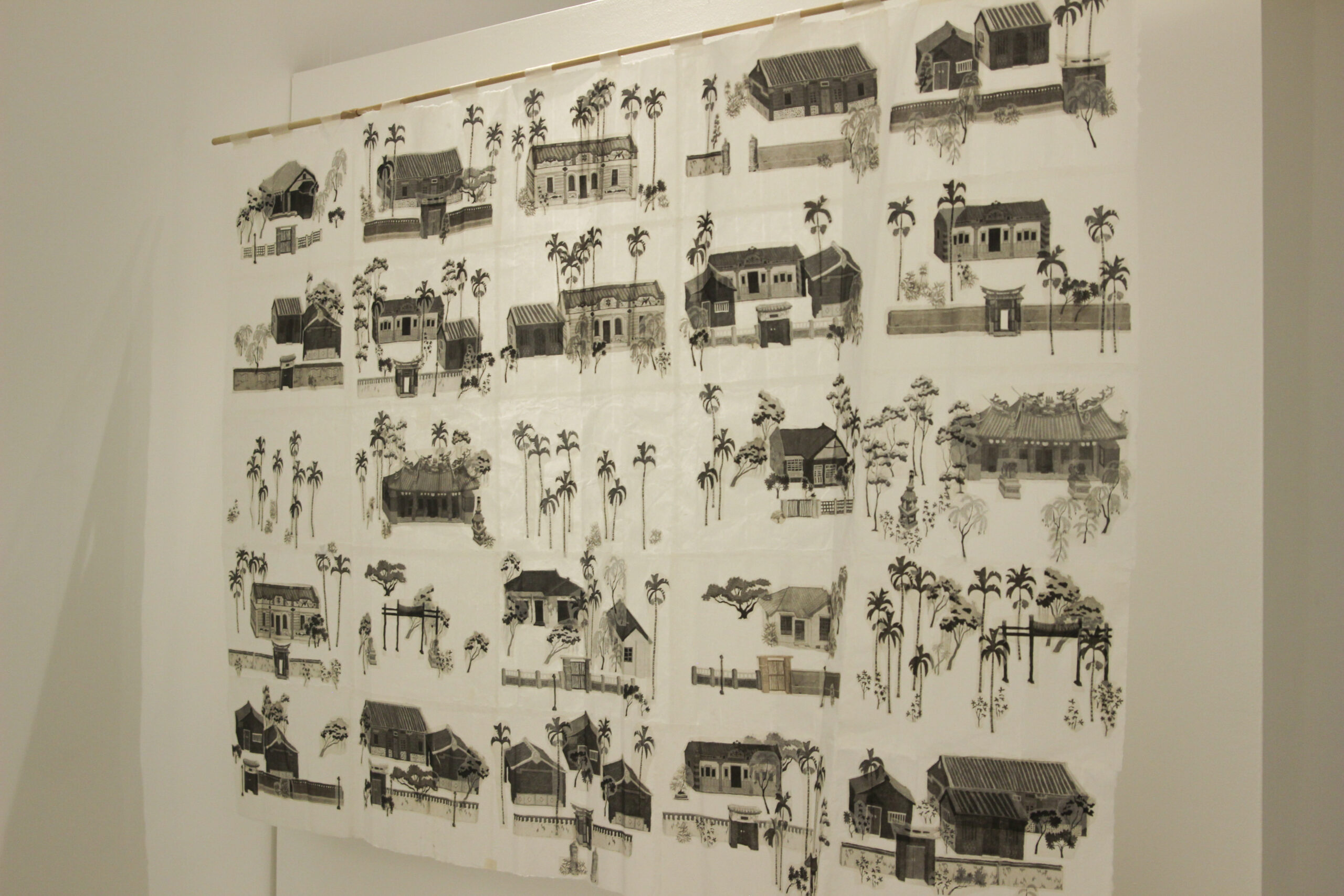
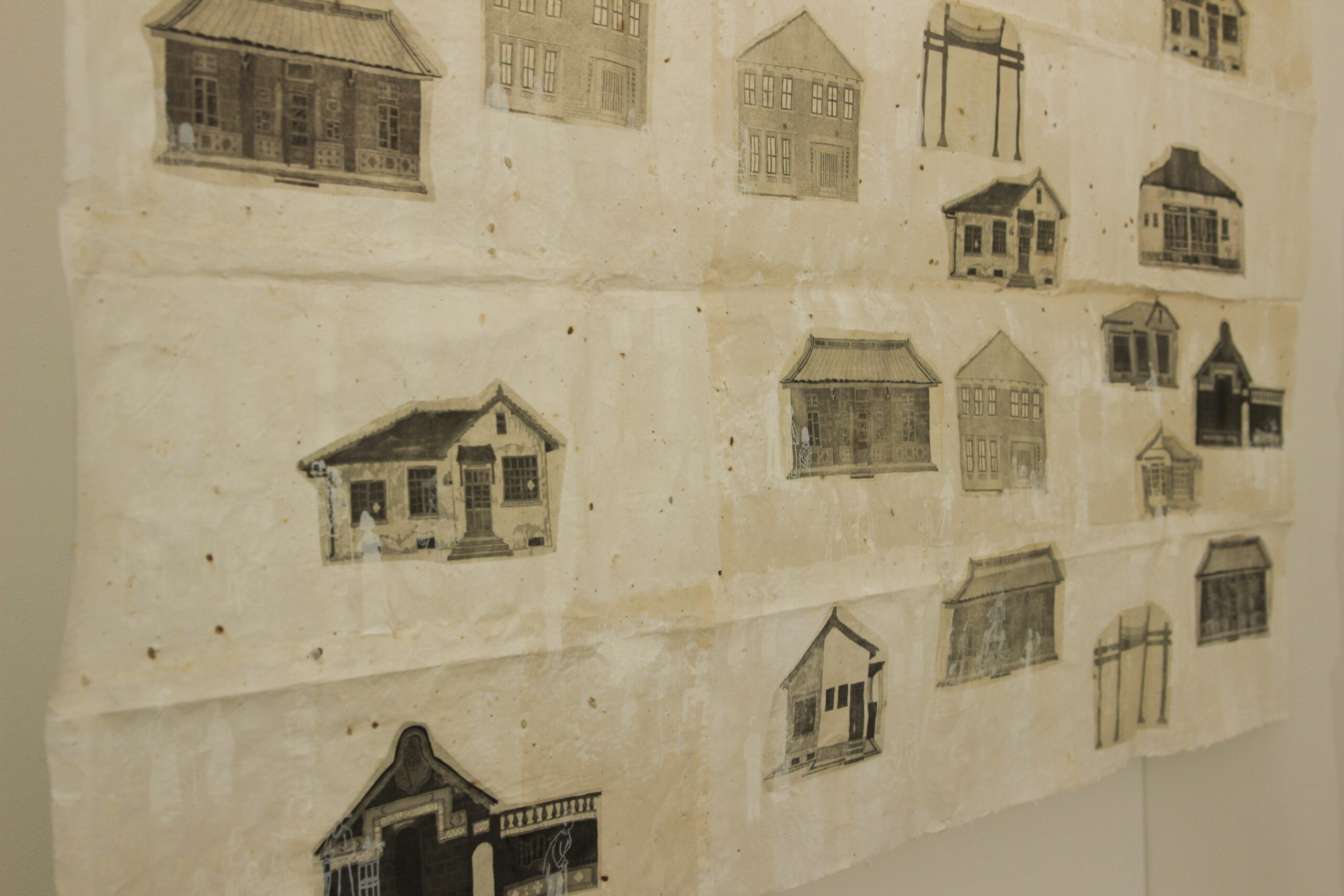
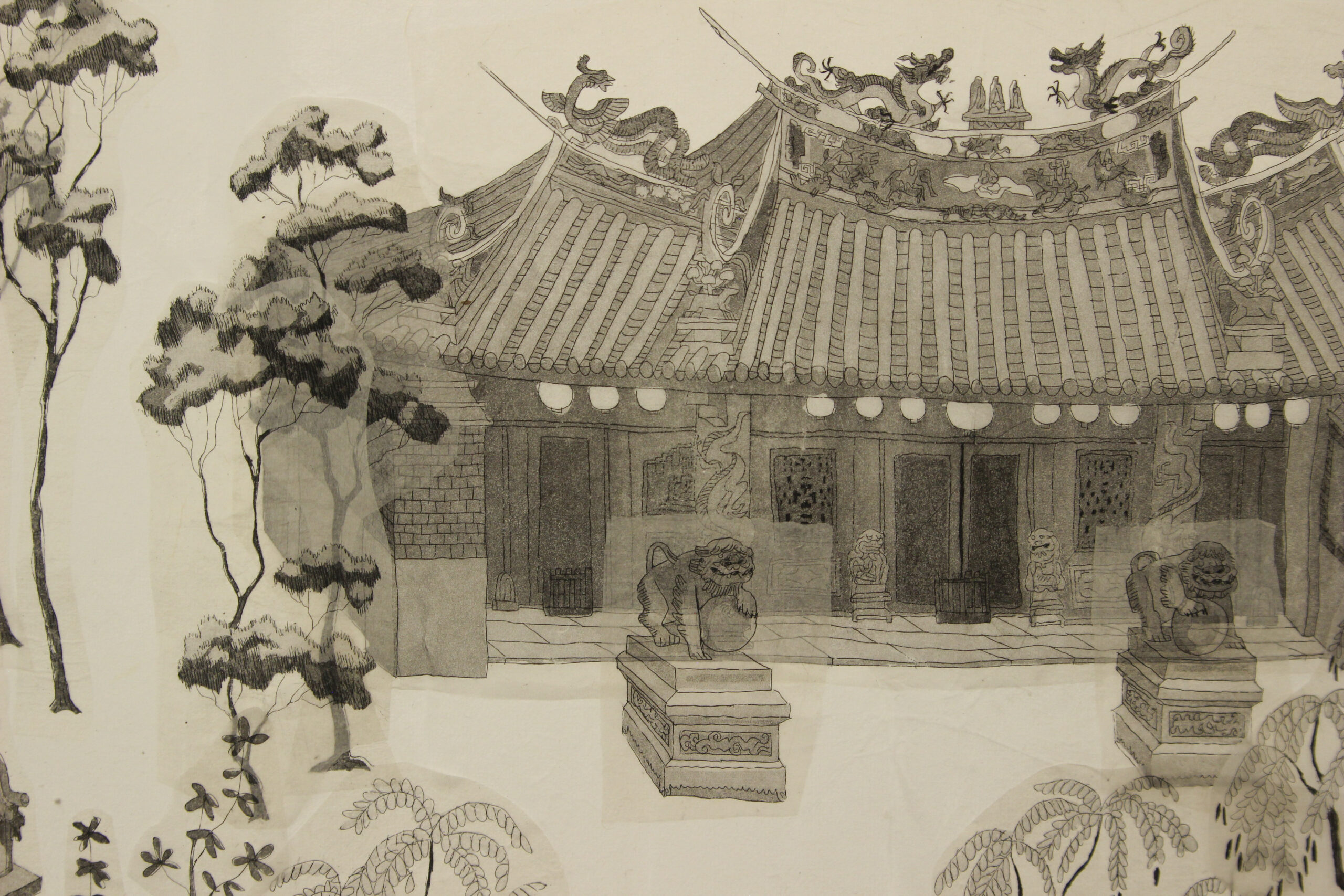
Using his skills as a printmaker, papermaker, and inkmaker, Juan has created a welcoming installation within the gallery. Large handmade paper panels are suspended from the ceiling. These sheets were made by Juan using indigenous plants from both Canada and Taiwan and are arranged to suggest the layout of a traditional Taiwanese house. As the viewer passes through the doorway of the home and enters the interior space, the paper panels sway gently in response to their movement. Printed on the panels are Juan’s detailed depictions of actual homes, temples, and plants from southern Taiwan. While the village buildings are created through the process of copper plate etching, screen-printed figures are visible only through backlighting to evoke the spirits of former residents. This contrast captures the collective memory of Taiwanese people during the White Terror era. The installation offers a quiet space for connection, conversation, and contemplation.
Juan uses his unique position as both an immigrant and recipient of two lands to demonstrate decolonization processes to Canadian audiences by documenting another society’s challenges and healing through his artistic process. “From this emotional journey, I am committed to further examining this colonial history and being an advocate for the autonomy of the Taiwanese people.”
Edward FuChen Juan lives and works in Vancouver, BC. on the unceded traditional territories of the xʷməθkʷəy̓əm (Musqueam), Sḵwx̱wú7mesh (Squamish), and Sel̓íl̓witulh (Tsleil-Waututh) Nations. He identifies as a queer Taiwanese person with ethnic roots to the Hakka and the Plain First Nations People of Taiwan.
Papermaking Workshop with Edward FuChen Juan
Saturday, July 26, 2025 from 1 p.m. – 4 p.m. WORKSHOP IS FULL
Join exhibiting artist Edward FuChen Juan for a free handmade paper-making workshop.
FREE | all materials provided | appropriate for people aged 18 and older | paper can be picked up Sunday, July 27, 2025
Space is limited, so registration is required. To register, please email info(at)seymourartgallery.com
Artist Talk with Edward FuChen Juan
Sunday, July 27, 2025 at 2 p.m.
Join exhibiting artist Edward FuChen Juan as he talks about his artistic process and the current exhibit.
Edward FuChen Juan lives and works in Vancouver, BC. on the unceded traditional territories of the xʷməθkʷəy̓əm (Musqueam), Sḵwx̱wú7mesh (Squamish), and Sel̓íl̓witulh (Tsleil-Waututh) Nations. He identifies as a queer Taiwanese person with ethnic roots to the Hakka and the Plain First Nations People of Taiwan.