u n r a v e l
TATJANA MIRKOV-POPOVICKI . AMANDA WOOD . CARLYN YANDLE
February 3 – March 14, 2026
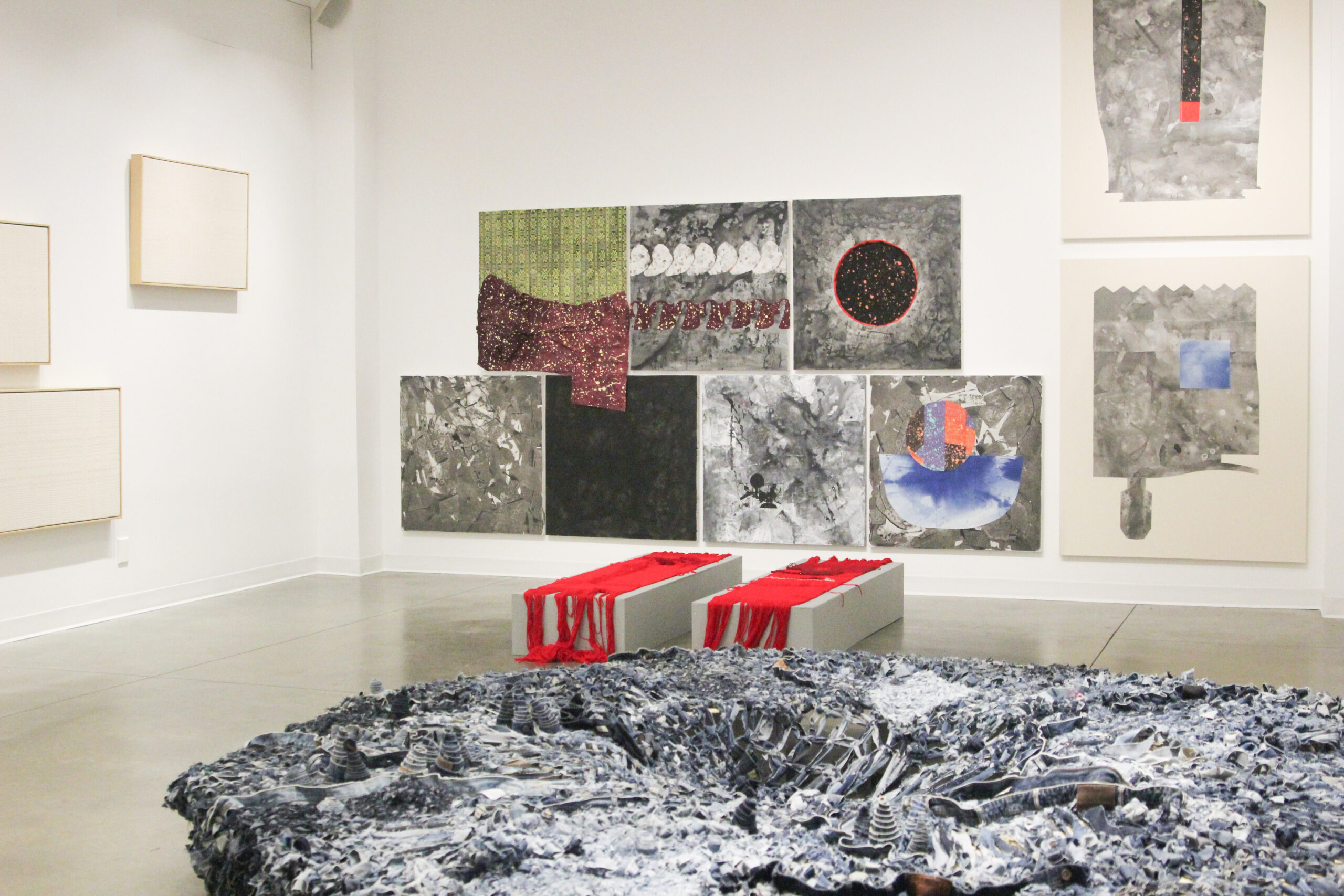
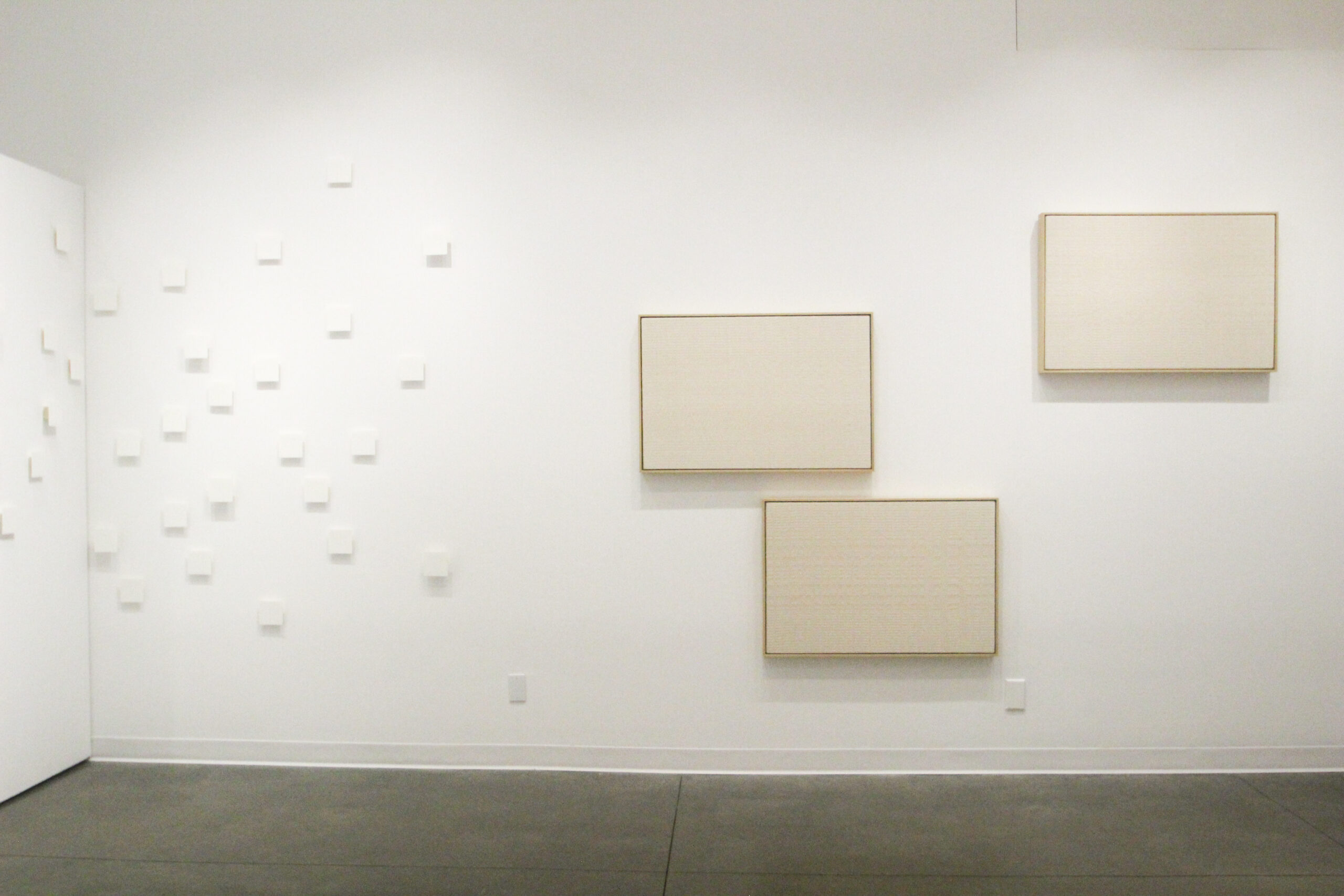
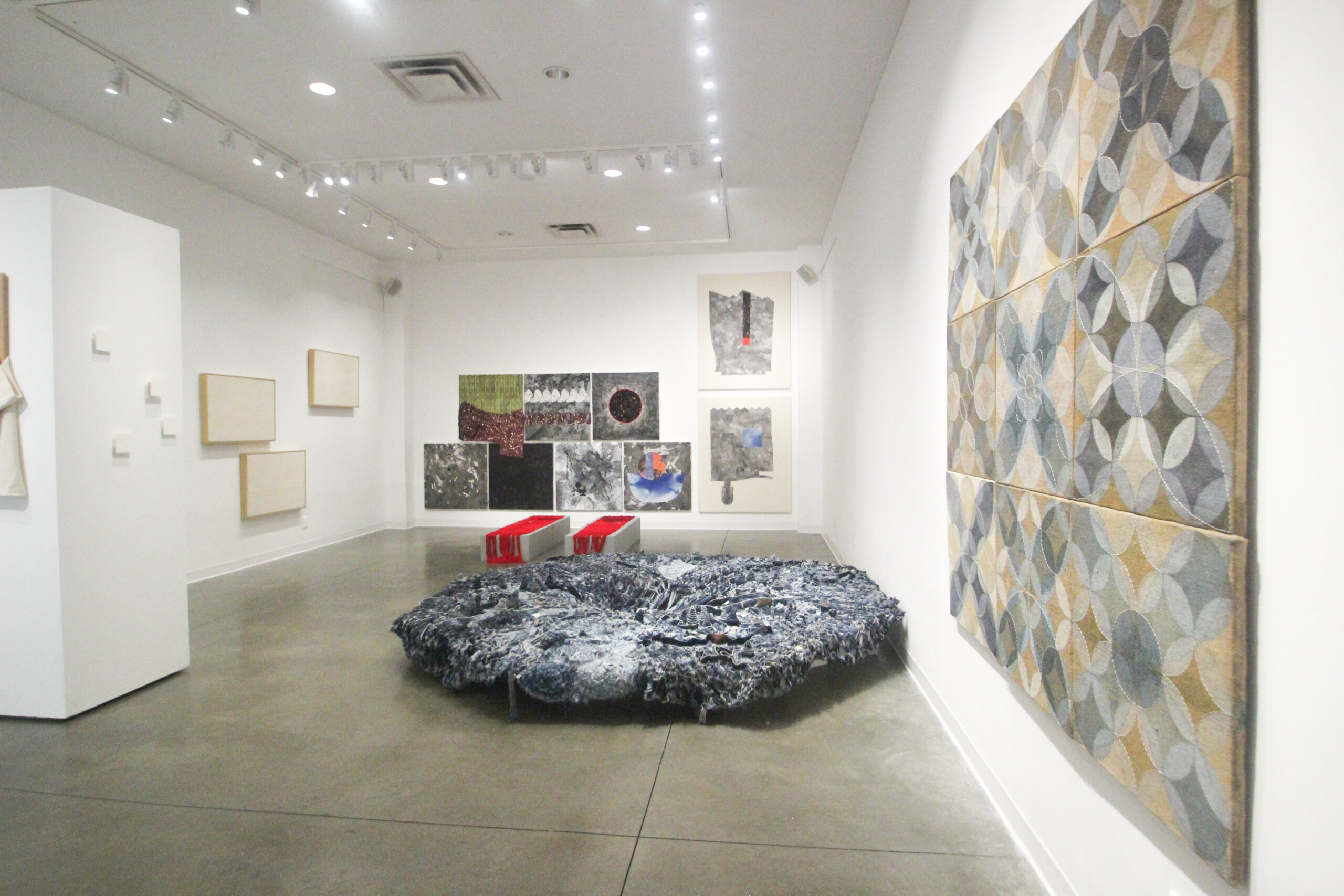
In unravel, artists Tatjana Mirkov-Popovicki, Amanda Wood, and Carlyn Yandle use installation, repetition, and the transformation of familiar materials to explore themes of displacement, divergence, and difference. Each artist disrupts their own creative process in a unique way, oscillating between structure and disorder. Whether they are painting, weaving, printmaking, or sewing, the subversion of expectations around materials and making is key to the concepts that inform their work.
TATJANA MIRKOV-POPOVICKI
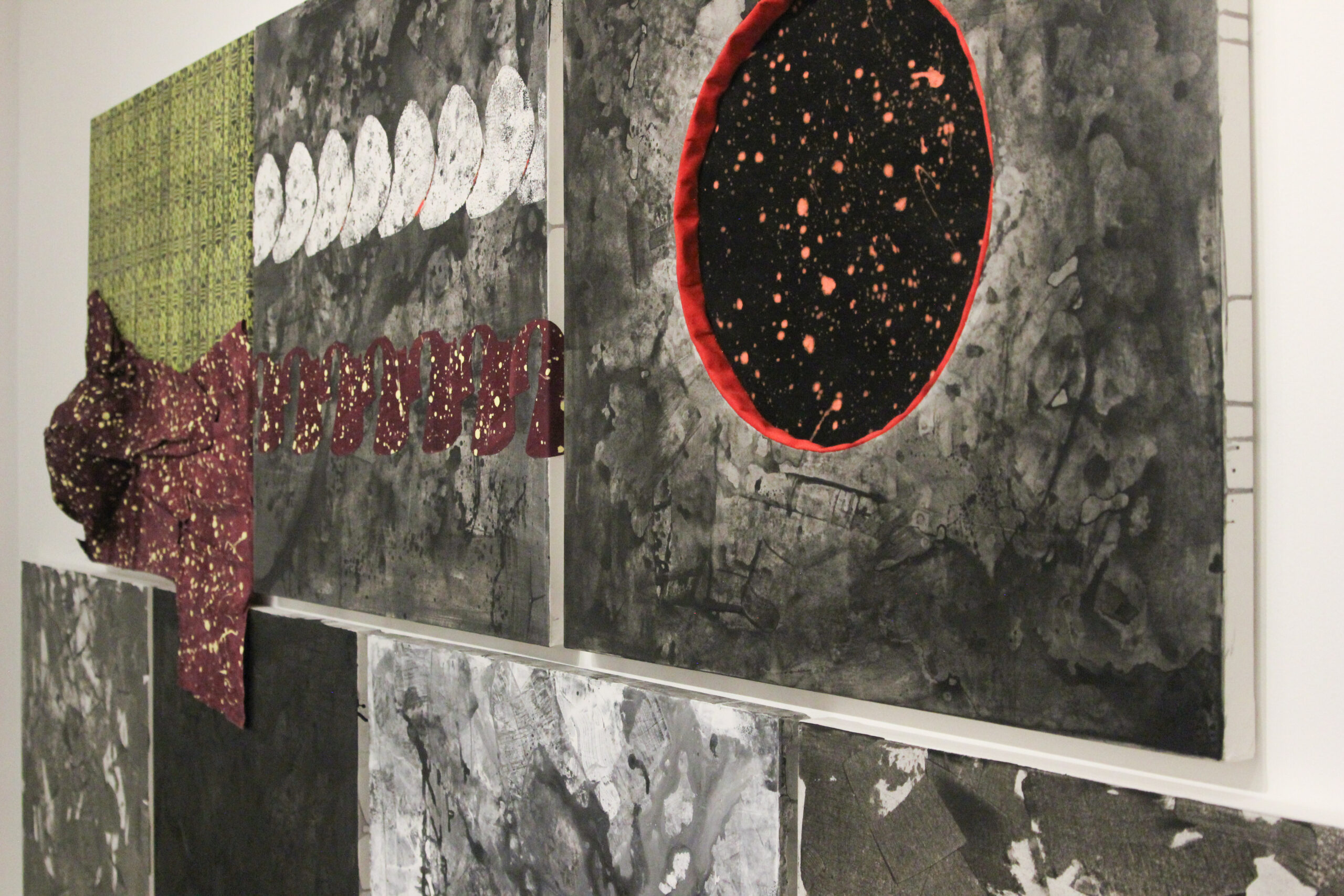
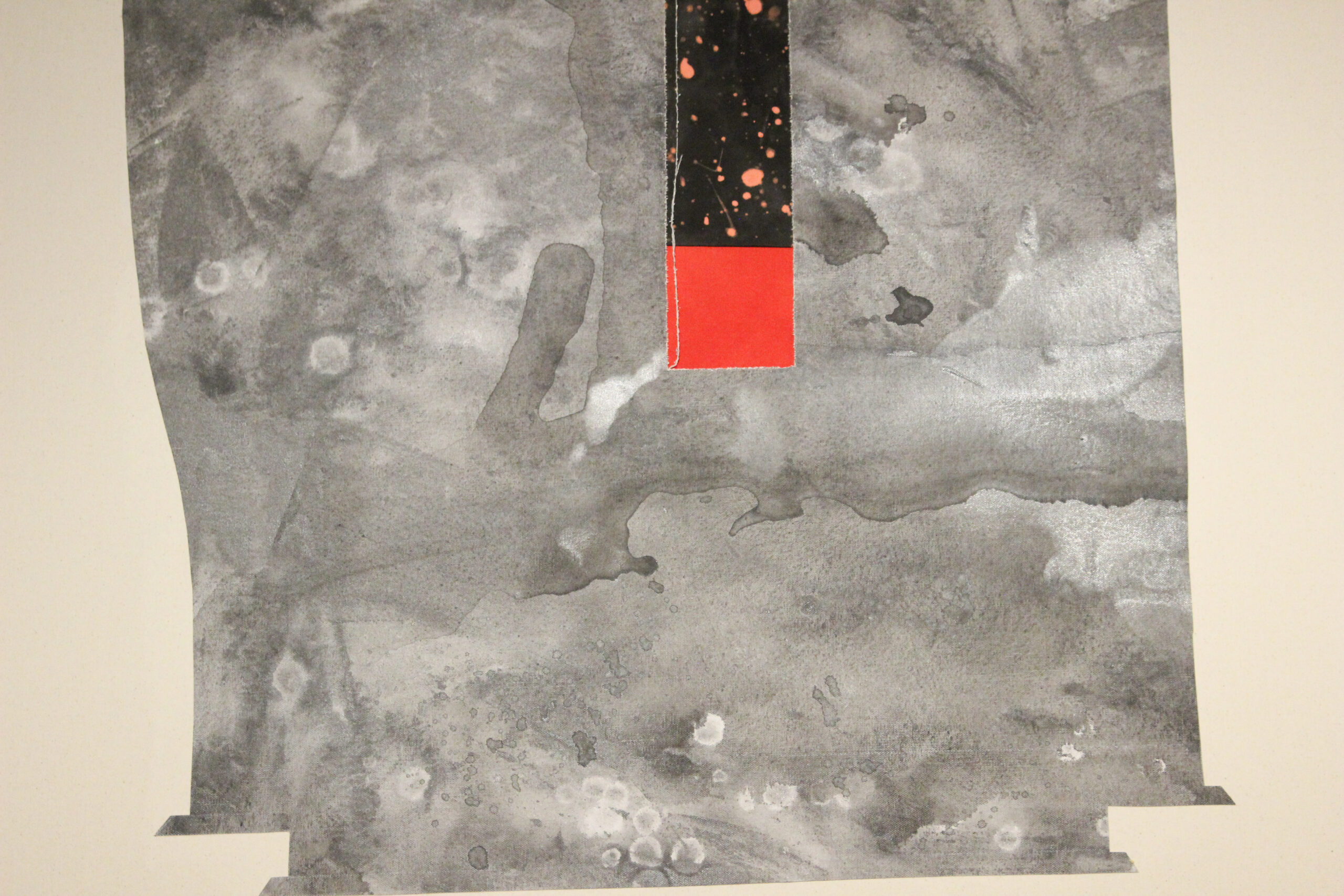
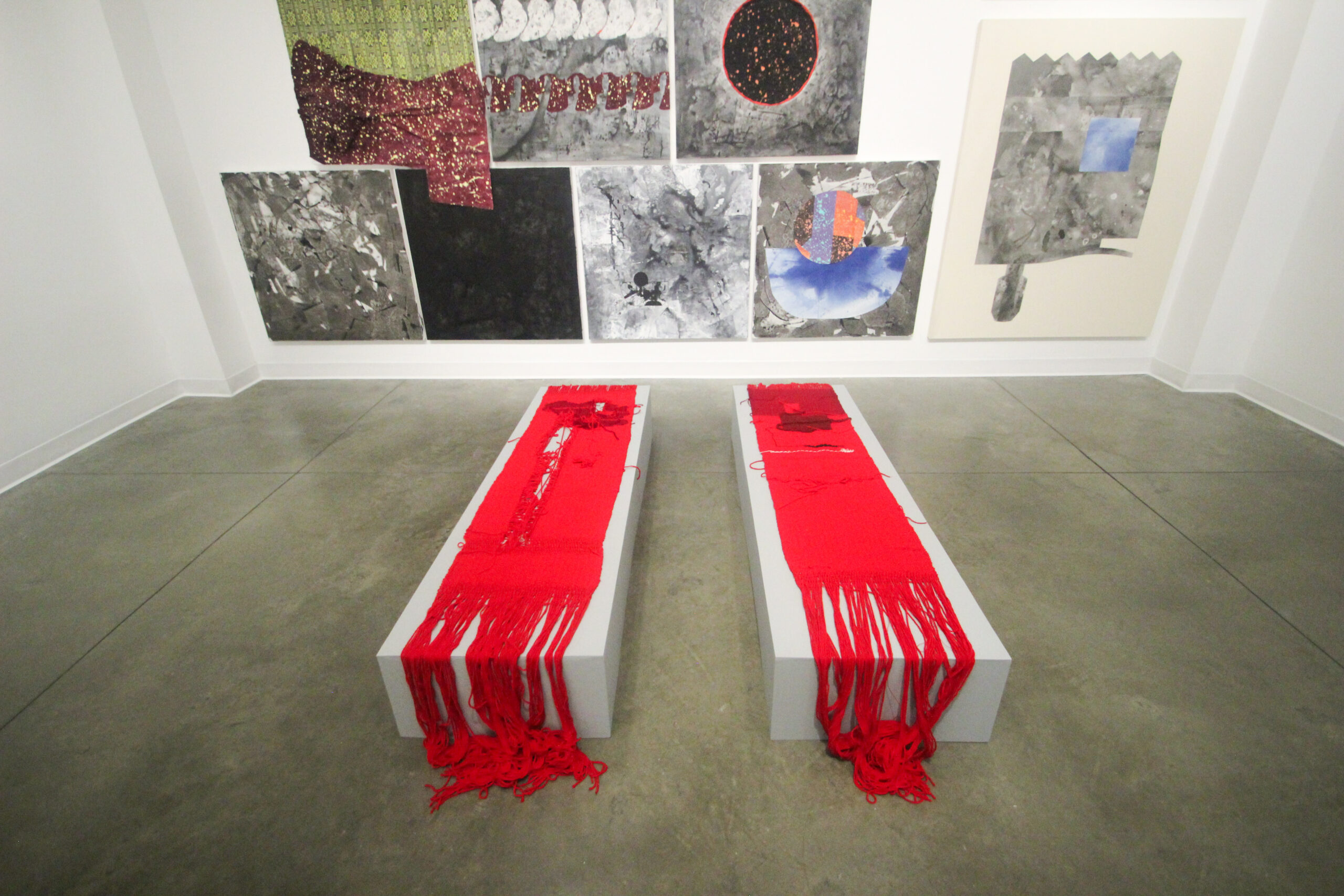
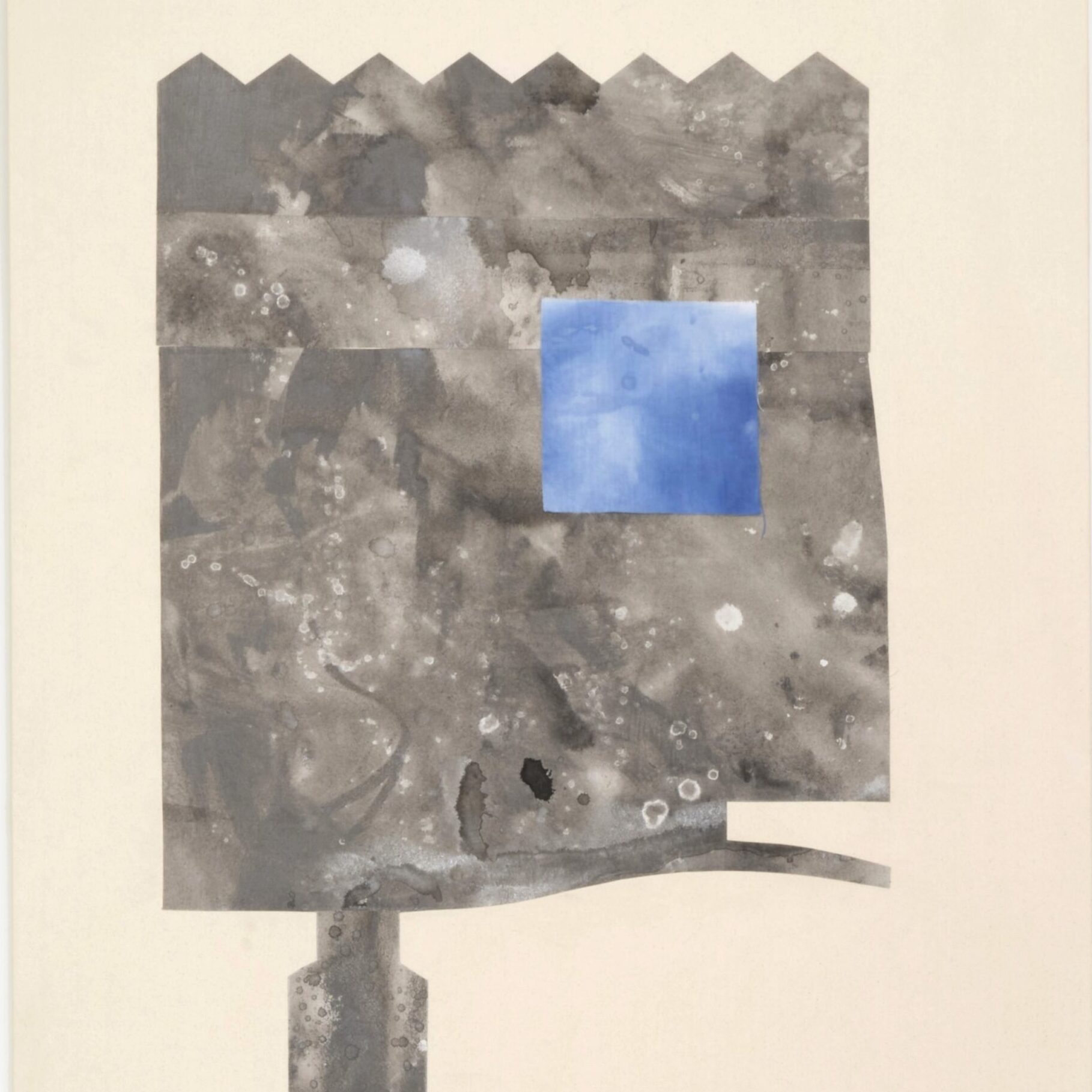
“My work explores how cultural heterogeneity can be expressed in an art form through painting, drawing, collage, and fiber art. I investigate the gestures and aesthetics of literally and figuratively folding up the old life, uprooting oneself, negotiating the crossings of political and geographical borders, leaving the loved ones behind, finding new pathways across foreign lands, and rebuilding a new life.
Art creation is a process with the potential for evoking collective emotions tied to socio-political and personal conditions, and a method for mining history and establishing connections with the present and future. The context of displacement and the resulting cultural dichotomy are global phenomena. This is the foundation for my semiotic, abstract visual language based on the ideas evocative of a displaced life, such as fragmentation, folding, patterning, tearing, repairing, and personal archiving.
Displacement is and probably always has been a normal state of being for humanity. My artwork establishes a worldview where cultural ambiguities resulting from displacement belong in the space of observation, recollection, contemplation, and multicultural harmony.
Despite my cultural ambiguity, I am keenly aware of my positionality in Canada as an immigrant/settler. I empathically and respectfully navigate this land while seeking the language to state that even when one does not belong to any one place, one still belongs in the world. I interweave the known with the unknown and imagined, be it Serbian, Canadian, or multicultural.”
AMANDA WOOD
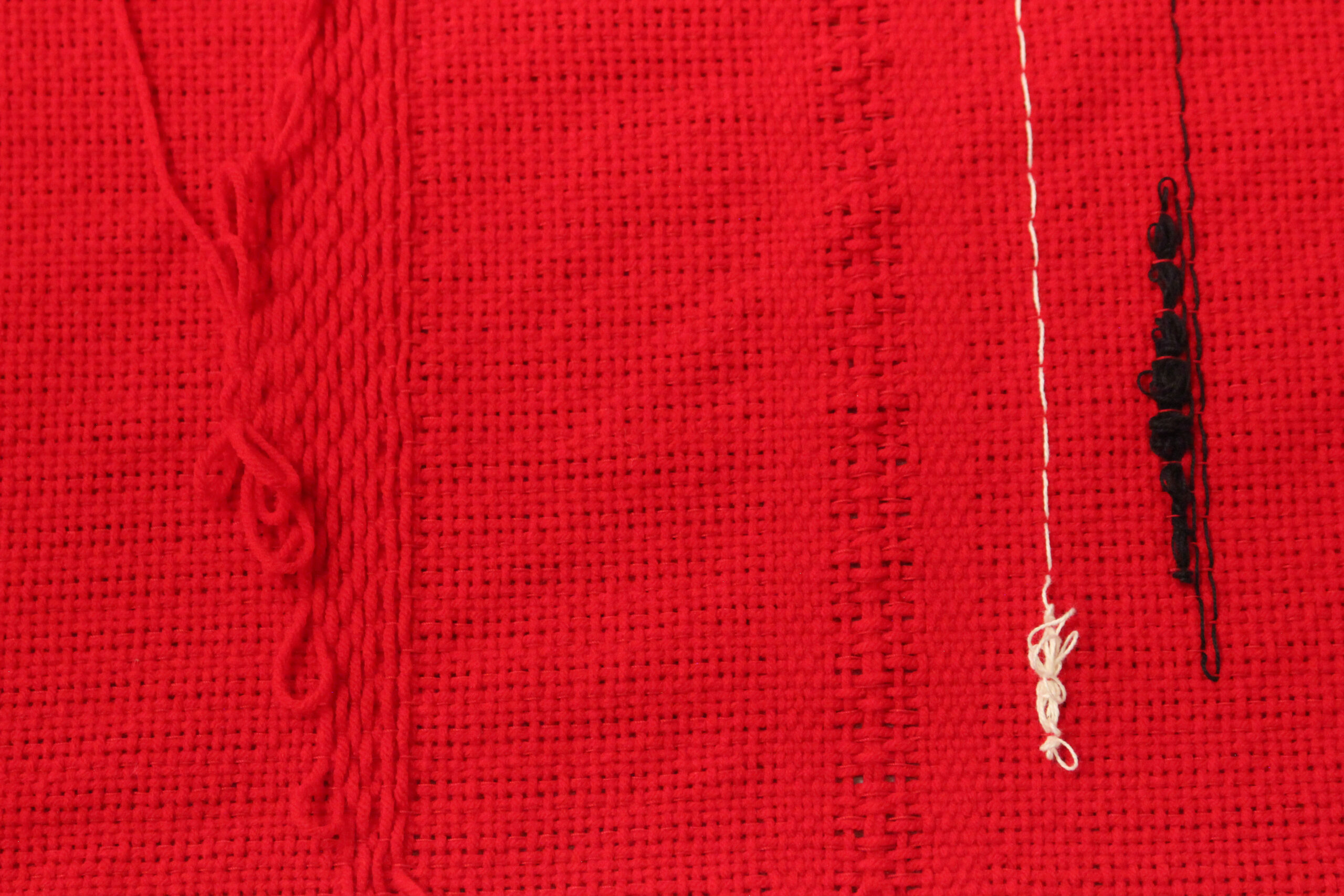
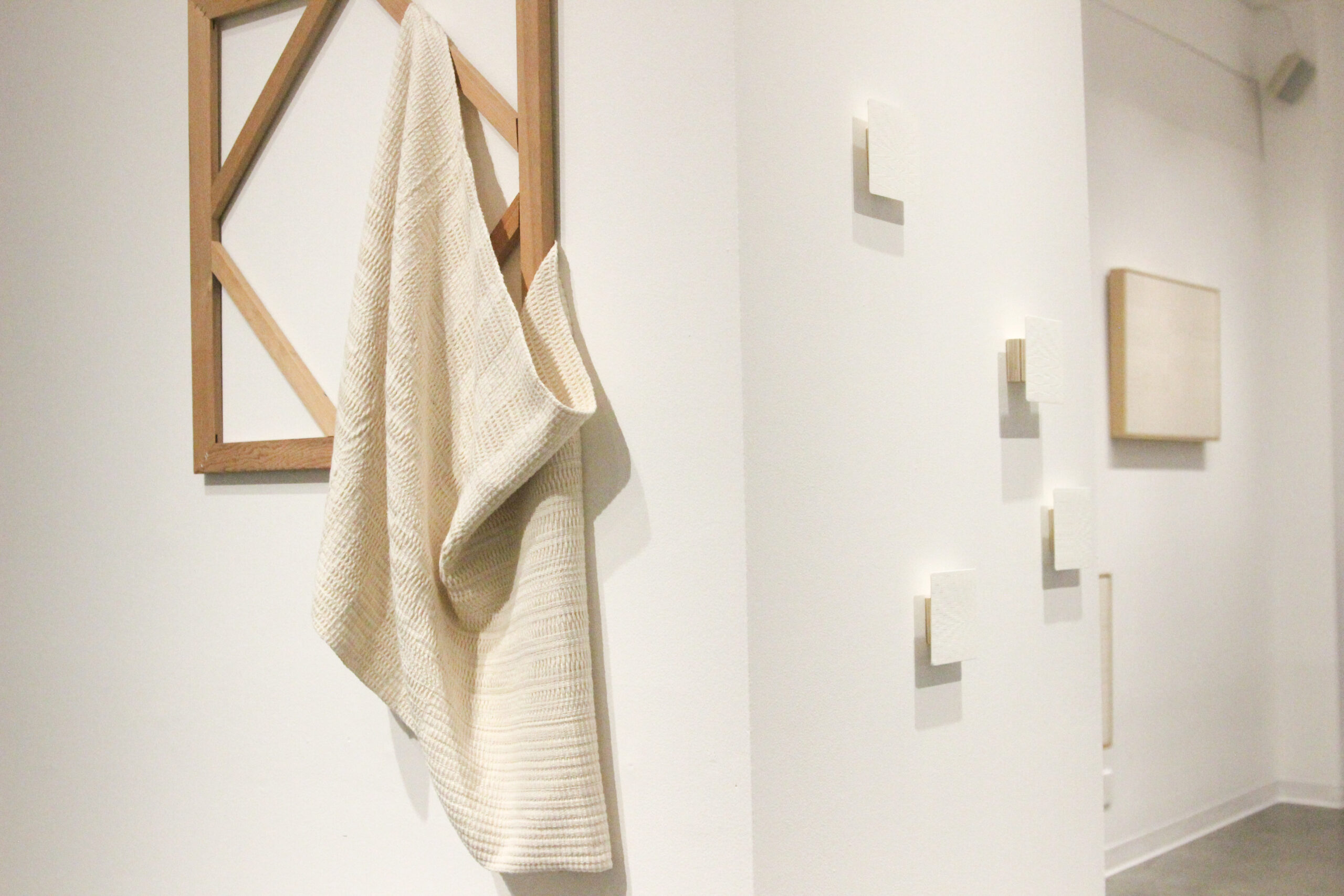
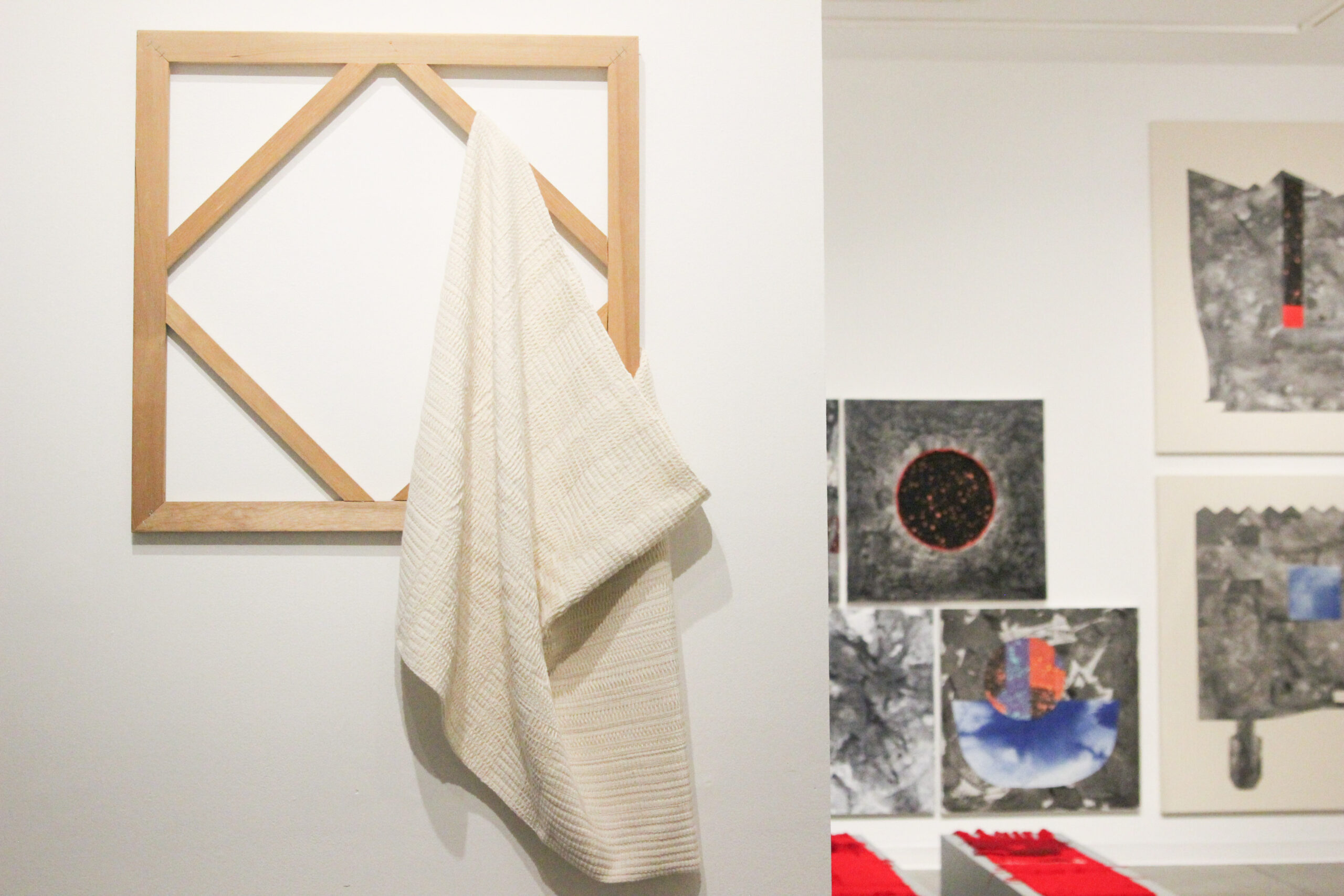
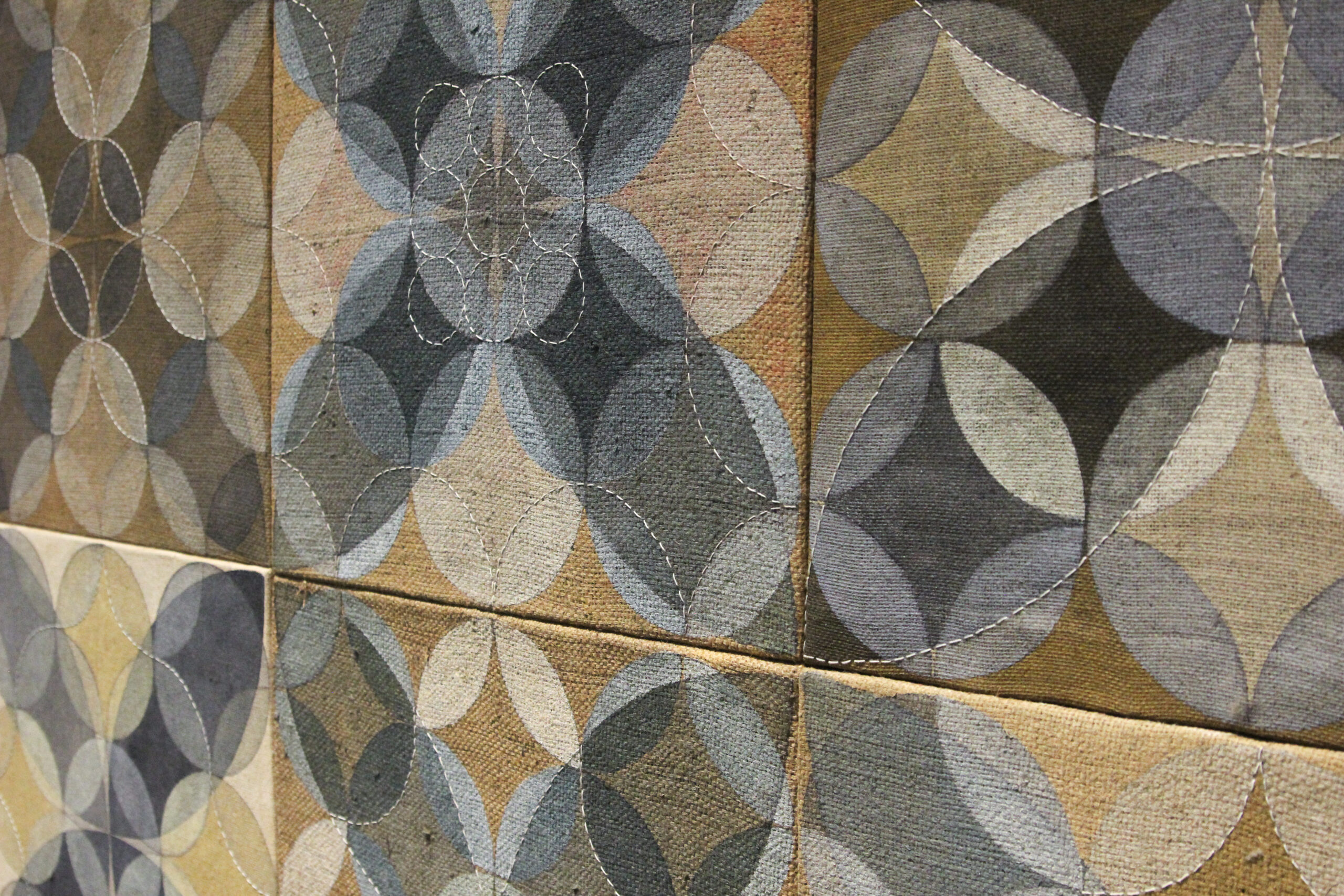
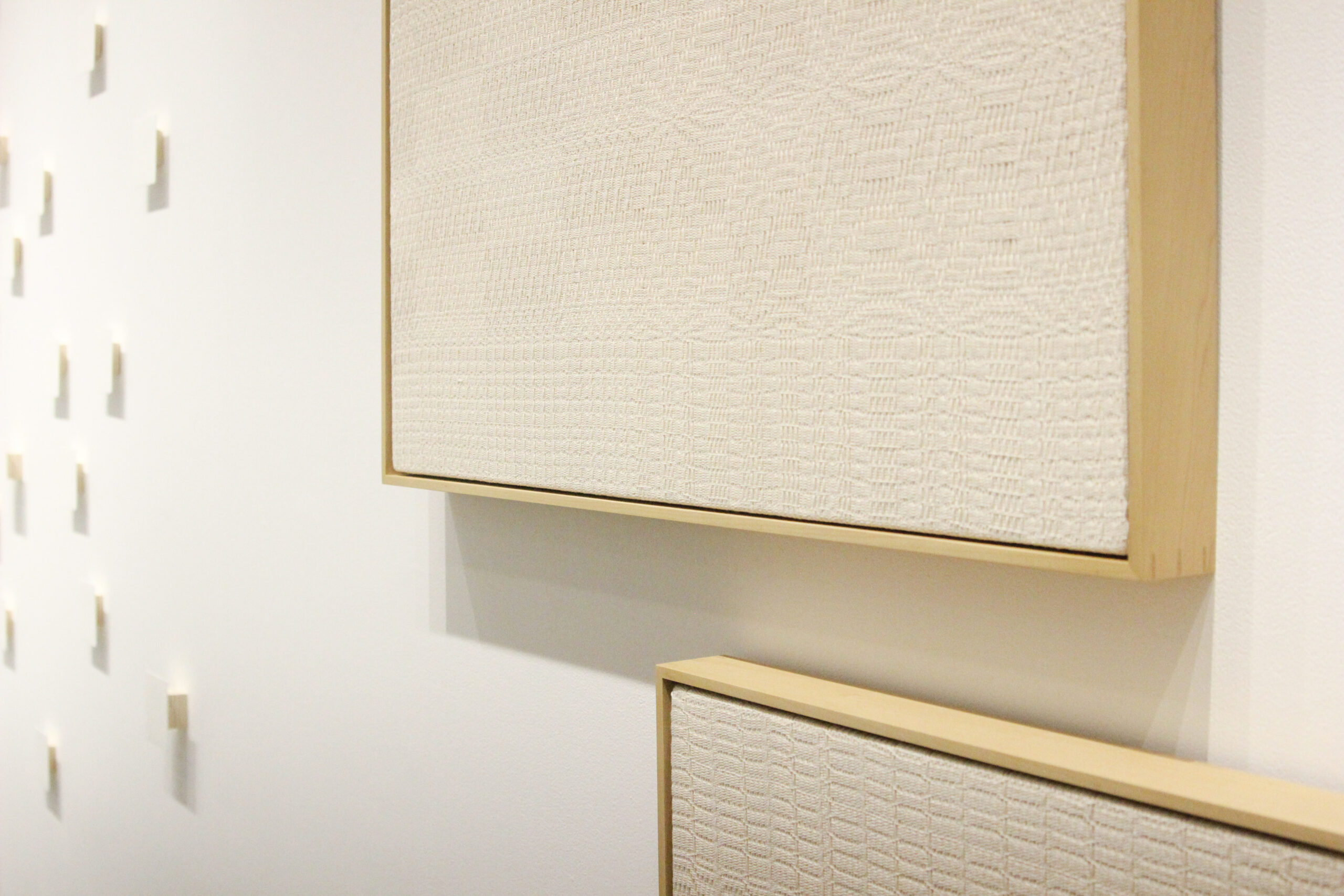
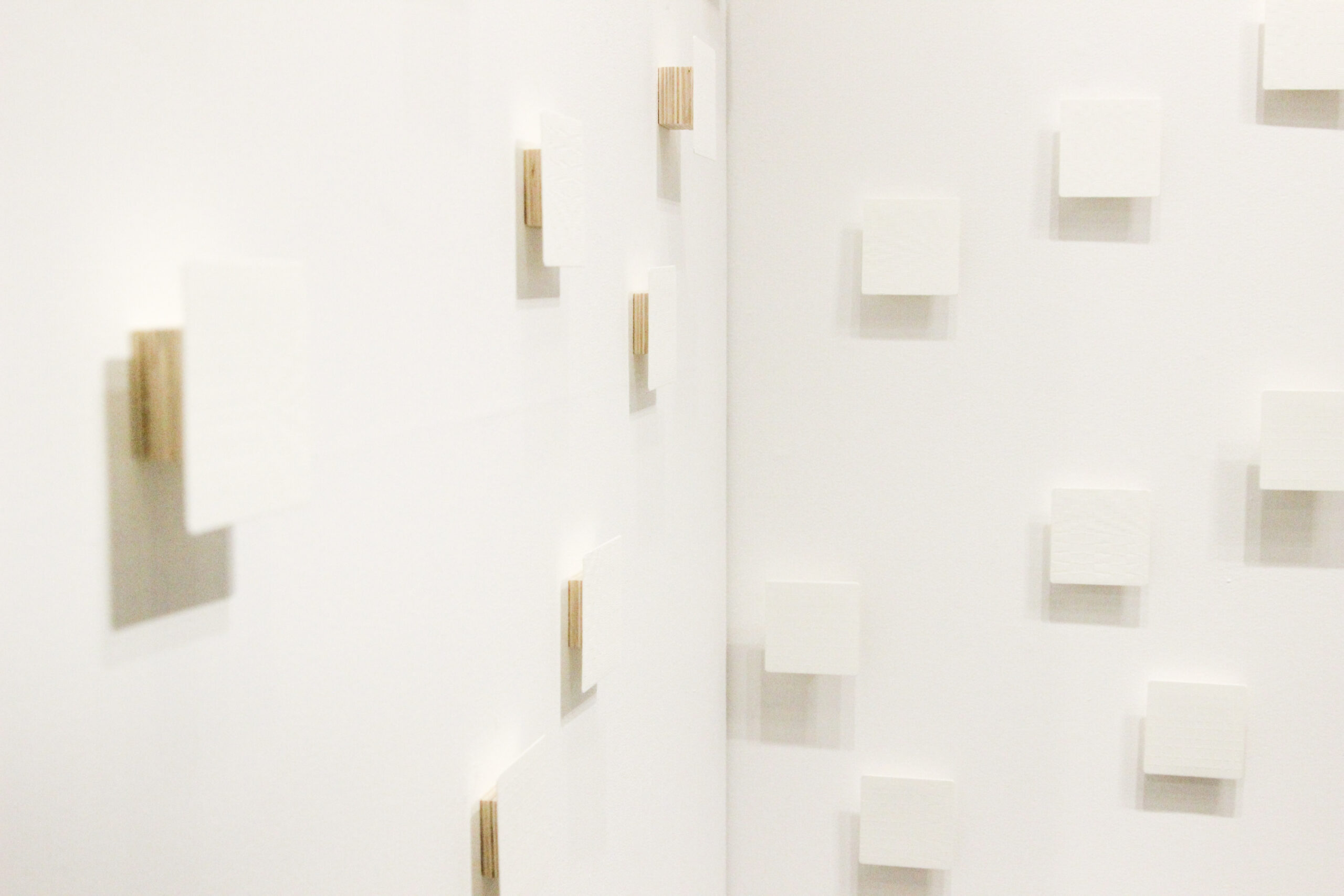
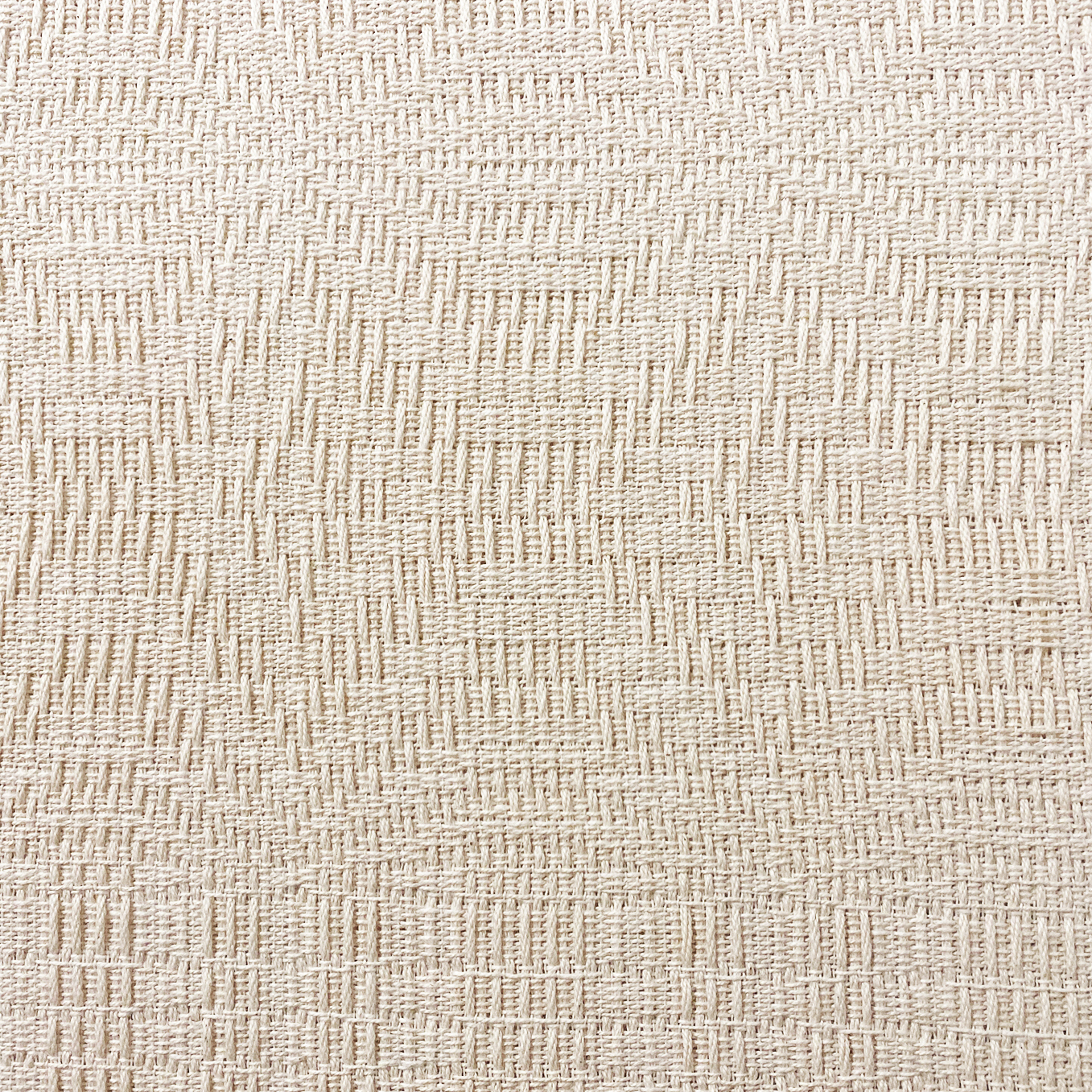
“My practice begins with repetition: woven grids, halftone dots, and modular patterns that emerge, fracture, and radiate across surfaces. These structures initially suggest order, yet sustained attention reveals tension, rupture, and divergence. I am drawn to thresholds and edge-places—sites where repetition unsettles rather than resolves, and where ornament functions as a counter-code that exposes the fragility of systems.
Pattern operates in my work as both material and methodology. Weaving and printmaking are process-oriented practices that carry rhythm, memory, and translation. Their slowness encourages close looking and attunement. Within these in-between spaces, repetition becomes a means of holding multiplicity: structure alongside disruption, continuity alongside fracture, and stability alongside transformation.
The writing of Édouard Glissant offers an important framework for this approach. His concept of archipelagic thinking rejects the idea of a monolithic continent in favour of a scattering of islands—separate yet interrelated, held together by currents of relation rather than fixed hierarchy. Meaning emerges through connection and exchange rather than fusion or resolution, and opacity is valued as a condition that allows difference to remain without being fully known or absorbed. In this landscape, an individual is autonomous and valued for their difference.
I understand my practice as a form of attunement to fragments, glitches, and flux. Working across media, I create conditions where structure and disruption coexist, and where repetition radiates outward into divergence. Pattern becomes a field of resonance rather than control. It is a site where intercultural identity, neurodivergence, and poetics converge—a language for engaging with what is entangled, unstable, and radiant.”
CARLYN YANDLE
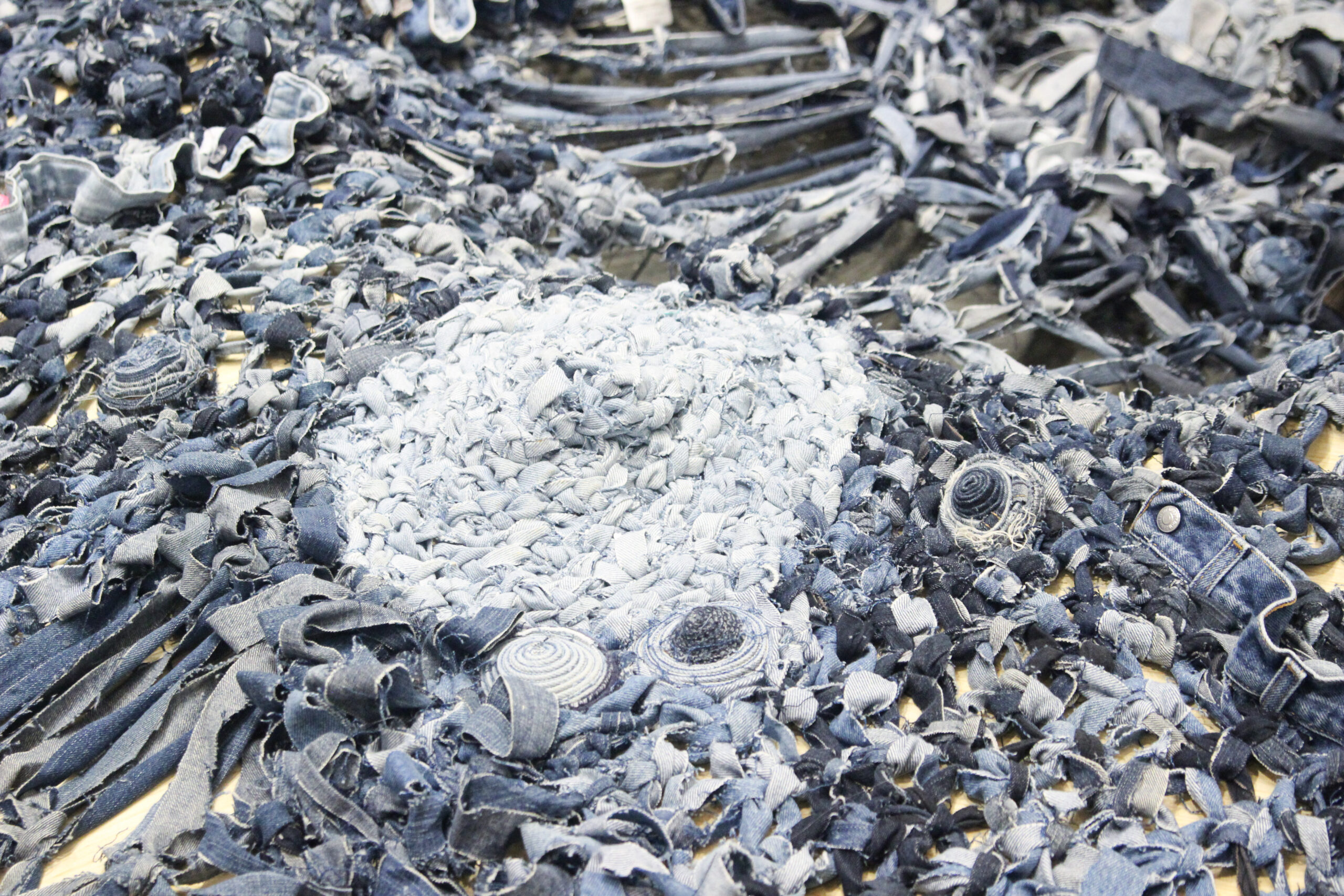
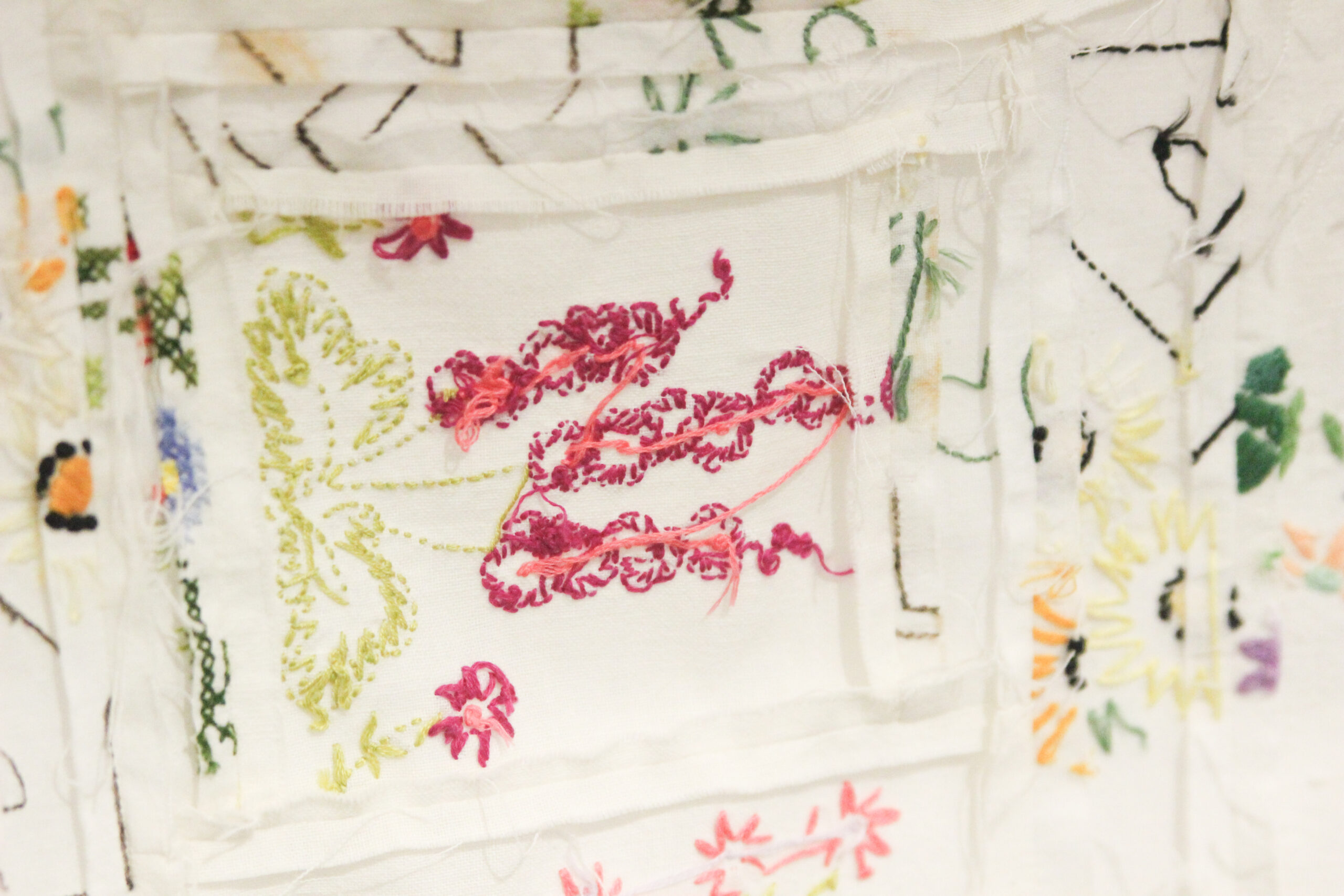
“What is the value of hand-making objects in a world drowning in objects, during these perilous political times and when smooth, instant image-creation is increasingly the work of non-humans? Making is connecting — across political differences, against fear and isolation, and beyond words. Each of these projects defies easy categorization, standing as both an aesthetic crafted object and an artifact of social history and connectivity, with the familiar methods and materials used to find common ground.
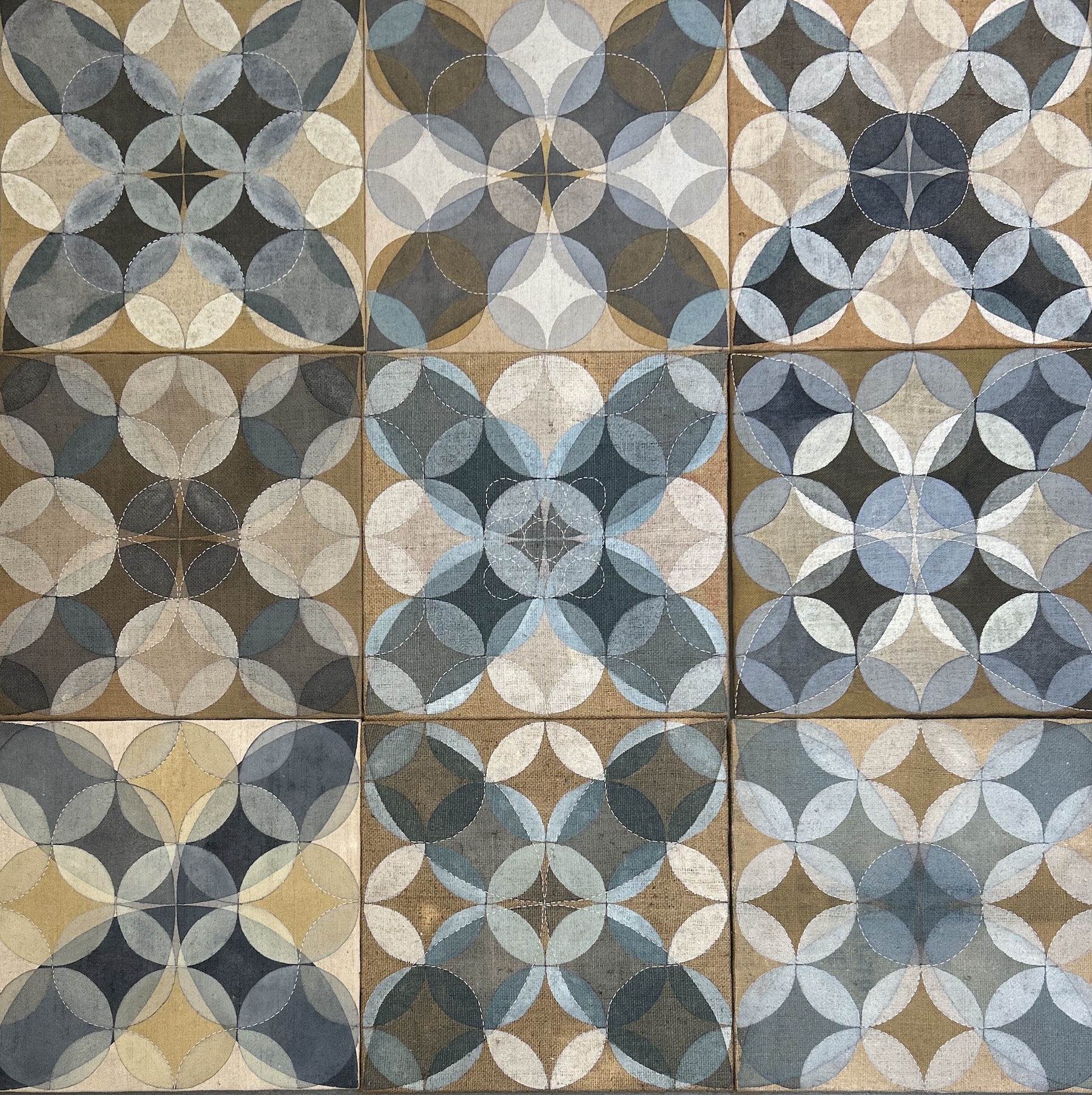
Making and viewing these works is a way of engaging with the physical world. Each project begins as a compulsion to gather up unwanted, abject human-made material in the immediate vicinity and explore its inherent value in the tradition of “making something out of nothing.” The resulting material explorations, motivated by climate crisis and over-consumption, seem to emerge of their own volition, resonating as domestic objects that span and conflate generations and cultures. They build on traditions of painting and fibre art while offering new ideas on form, function and concept.
Although each conceptual-craft object is a unique experiment, they are united by a first impression as pleasing, decorative objects followed by a closer, more discomforting reading. Many present a “good” side as well as the reverse “work” side that reveals the history of the making: the decisions, the changes in process, the mistakes, the knots and frays that are normally concealed. This behind-the-curtain view of the often-messy human creative process is a reaction to this generative-AI image boom devoid of creative process.”
Exhibition Reception: Sunday, February 8 from 2 p.m. – 4 p.m.
From Conversation to Practice Program with Exhibiting Artist Amanda Wood: Sunday, February 22 at 2 p.m.
HEARTH Sewing Workshop with Exhibiting Artist Carlyn Yandle: Sunday, March 1 at 2 p.m.
Artist Talk with Exhibiting Artist Tatjana Mirkov-Popovicki: Sunday, March 8 at 11 a.m.
TATJANA MIRKOV-POPOVICKI
“Multidisciplinary artist Tatjana Mirkov-Popovicki draws on disparate stories from her homeland of Serbia and her life in Canada as she seeks to reconcile her relationship to place. Her painting, mixed-media, and textile works are informed by ethnographic histories, Balkan folklore, and empathetic observation.
Mirkov-Popovicki has exhibited her work in solo and group exhibitions in BC, including Emily Carr University of Art + Design in Vancouver; Art Gallery at Evergreen in Coquitlam; Ferry Building Gallery in West Vancouver; Michael Wright Art Gallery in Port Coquitlam; North Van Arts; West Vancouver Community Arts Council; Revelstoke Visual Arts Centre; PoMoArts; and Gibsons Public Art Gallery. Tatjana is a 2025 MFA graduate from Emily Carr University of Art + Design.”
AMANDA WOOD
Amanda Wood is an interdisciplinary artist based on the unceded territories of the xʷməθkʷəy̓əm (Musqueam), Sḵwx̱wú7mesh (Squamish), and səl̓ilwətaɁɬ (Tsleil-Waututh) Nations (Vancouver, BC). Working across alternative photography, printmaking, and hand weaving, her materially grounded practice centers on repetition and tactile experience.
CARLYN YANDLE
Carlyn Yandle’s art practice interweaves a childhood steeped in West Coast counter-culture, a range of skills in traditional craft methods and her previous profession as a city newspaper journalist. She finds inspiration by literally playing with ideas, often with others and by using culturally-embedded found materials.